On This Page
- What Is A Tile Roof Re-Felt?
- What We Found Under The Tile
- Our Tile Roof Underlayment Replacement In Burbank, Step By Step
- Why Replace The Battens, Not Just The Felt?
- How Do You Know If Your Tile Roof Needs New Underlayment?
- Re-Felt Or New Tile Roof?
- Is A Re-Felt Cheaper Than A New Tile Roof?
- Do You Need A Permit For A Tile Re-Felt In Burbank?
- Burbank Homes And Tile Roofs
- Have A Tile Roof That Keeps Leaking?
- More Project Photos
- Roofing Terms
The Problem
The tile itself was fine, but the waterproof layer under it had worn out, debris had built up behind the old battens, and the wood at the roof edges had started to rot.
What We Did
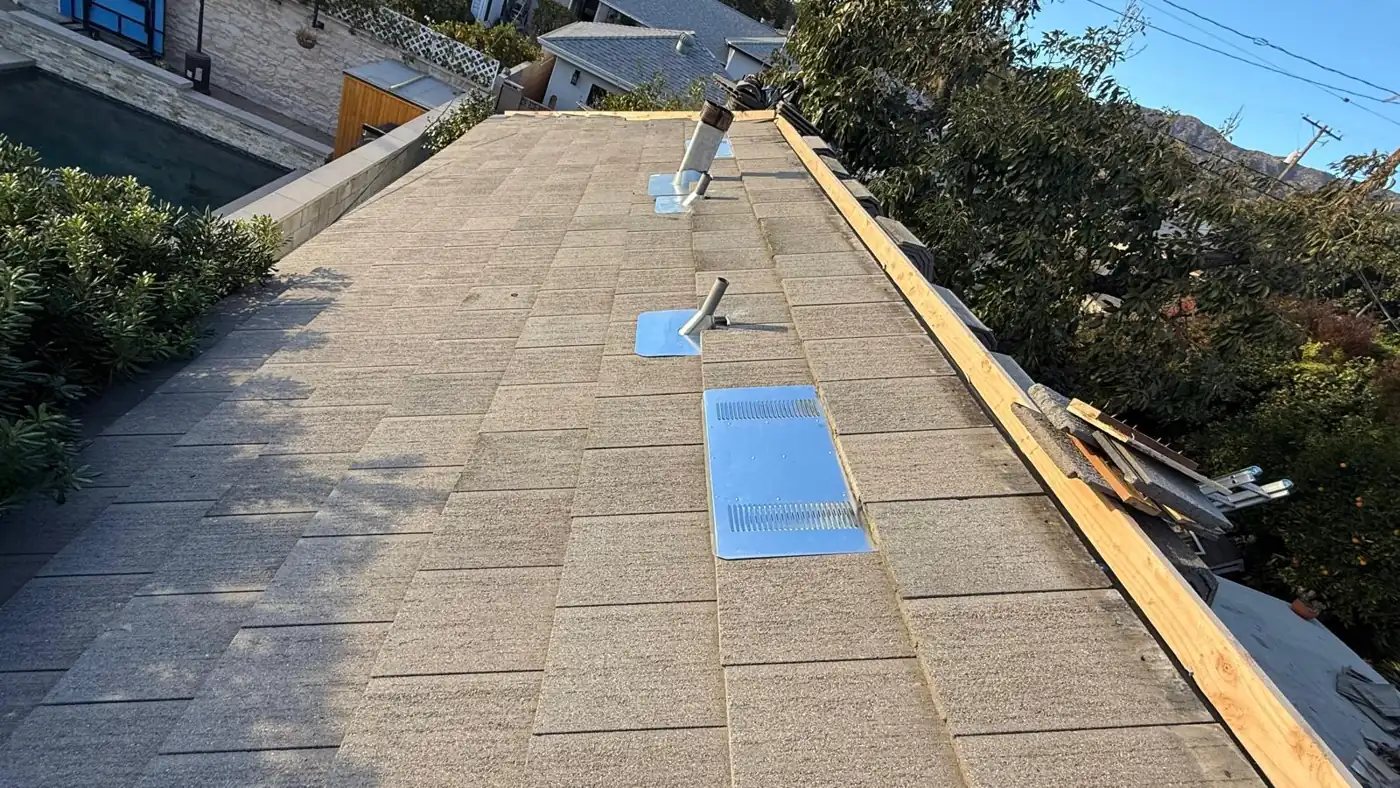
We lifted and stacked the tile, stripped the old underlayment and battens down to the wood, dealt with the rotted wood at the edges, put down new underlayment and new battens, then relaid the original tile with new pipe flashings and vents.
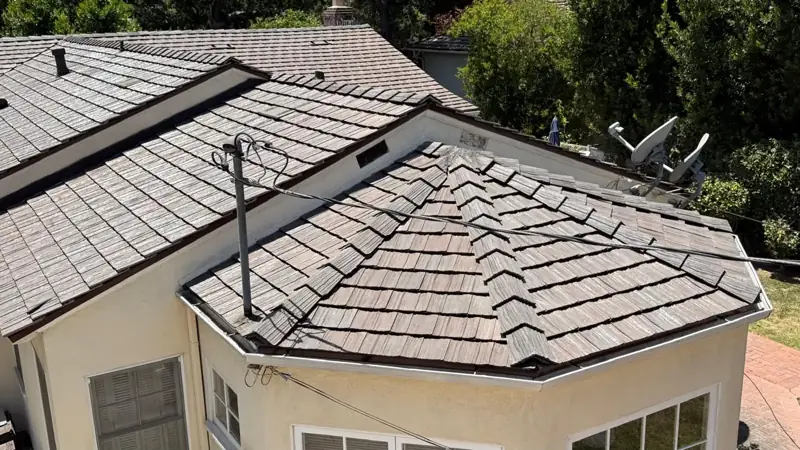
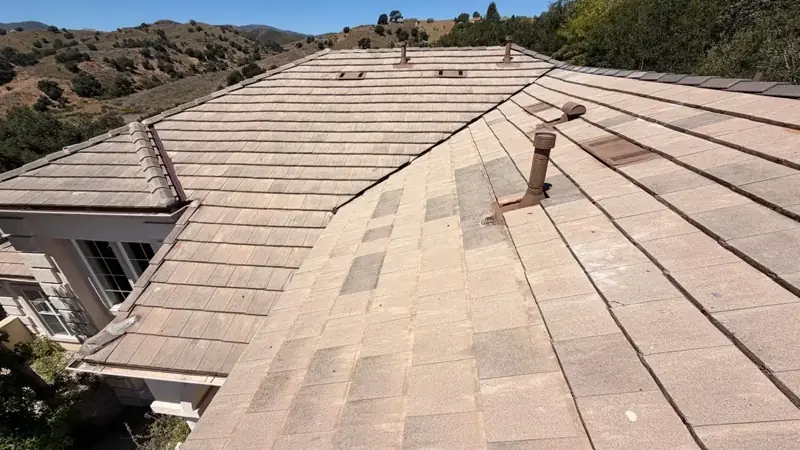
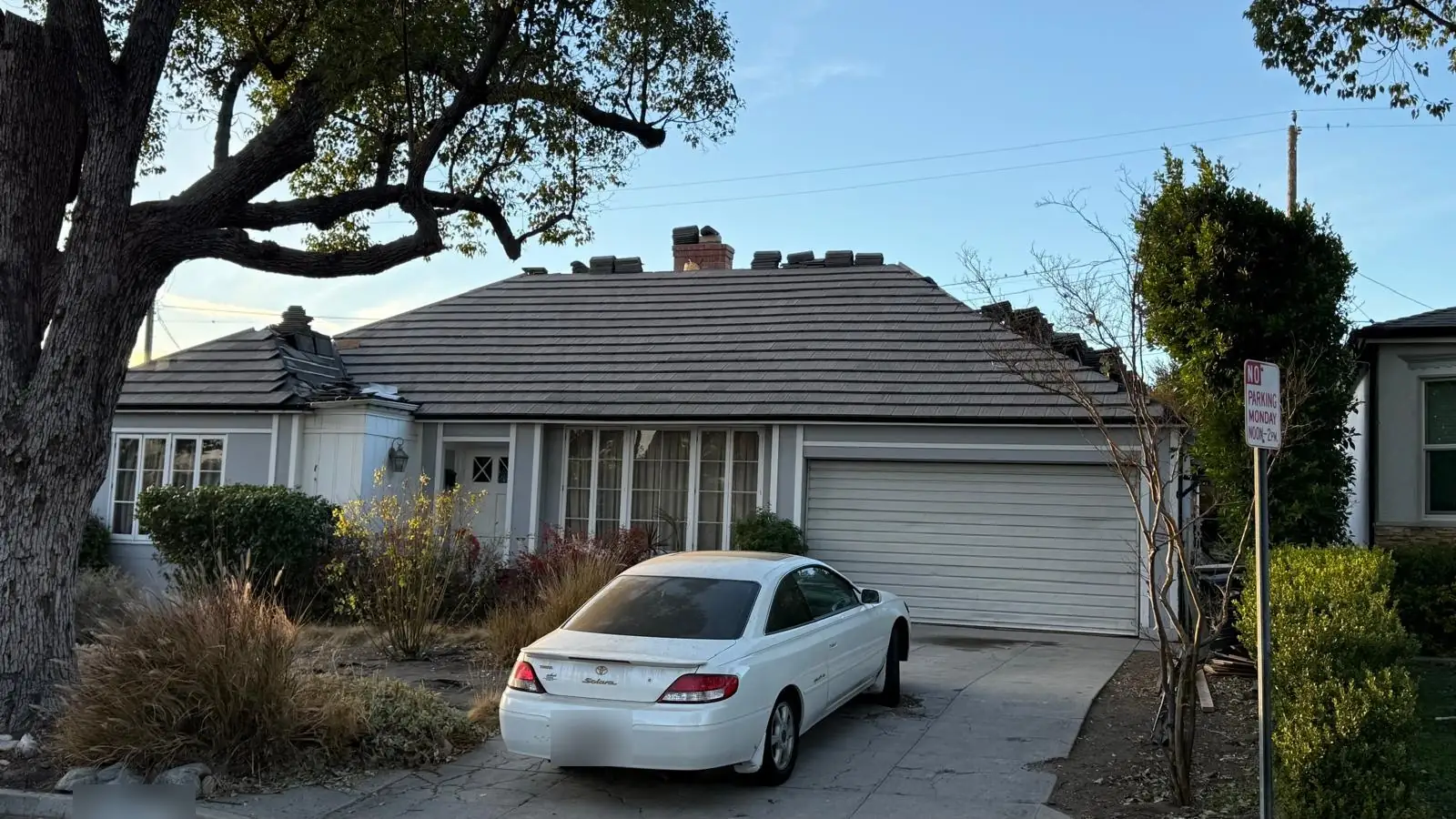
A tile roof underlayment replacement in Burbank means lifting the concrete tile and replacing the worn layers under it. Then the same tile goes back on. Roofers call it a re-felt. We did one on this single-story ranch home with a hip roof and a chimney, below the Verdugo Mountains. The tile was in good shape, but the layers under it were not.
What Is A Tile Roof Re-Felt?
A re-felt means taking the tiles off, replacing the worn waterproof layer under them, and putting the same tiles back on. Concrete tile can outlast the house. The underlayment under it does not, because sun and heat slowly dry it out until it cracks.
Tiles shed most of the rain, but some always slips between them, especially when wind drives it sideways. The underlayment is the backup layer that keeps that water out of the house. Eagle Roofing, a concrete tile maker, calls the tile the primary water-shedding layer and the underlayment the secondary barrier. Once that backup fails, the tiles on top can look perfect while water reaches the wood underneath.
A re-felt fixes the hidden layer and keeps the tile you already own. Eagle notes that when only the underlayment needs replacing, a lift and re-lay of the existing tile can be the right fix. That matters on a Burbank home like this one, where the tile color has weathered evenly over the years and new tile would not match.
What We Found Under The Tile
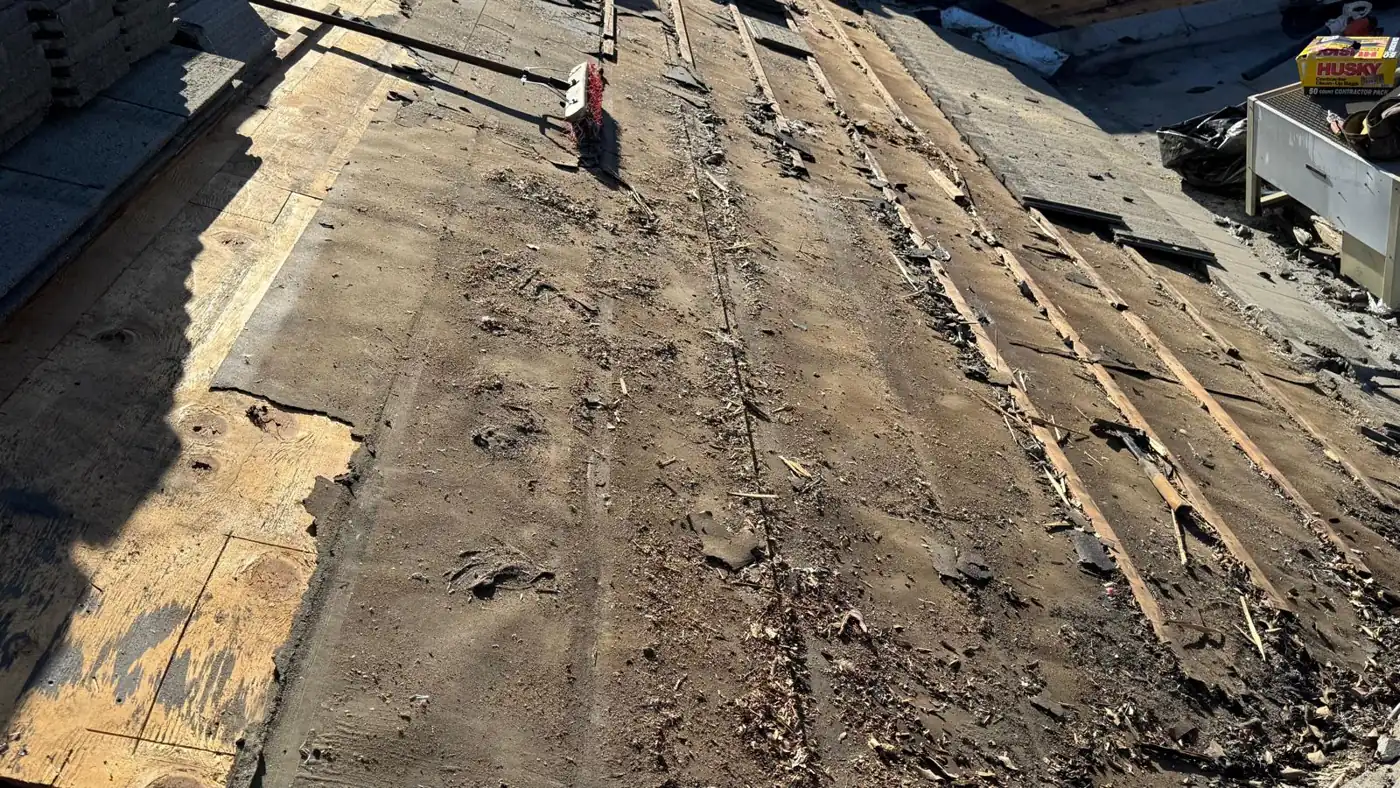
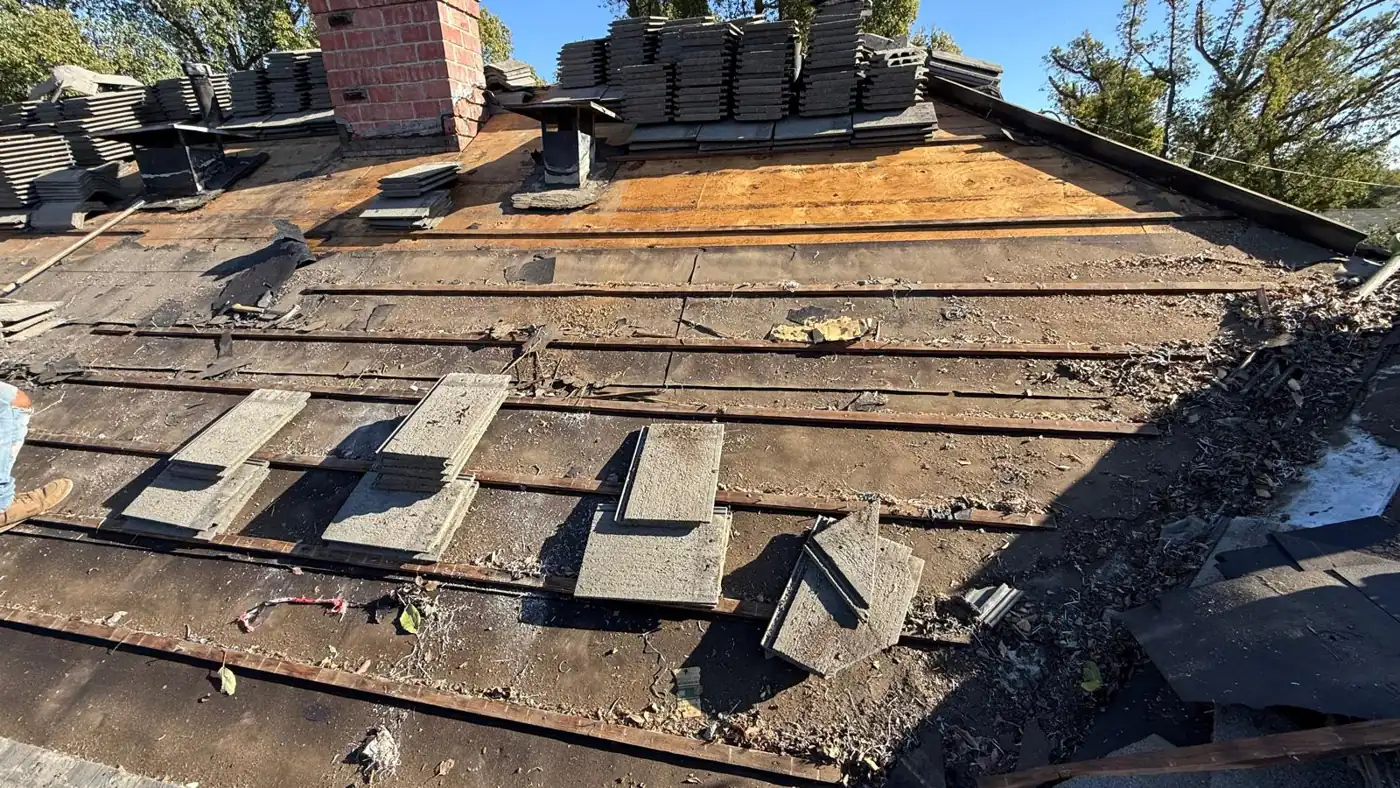
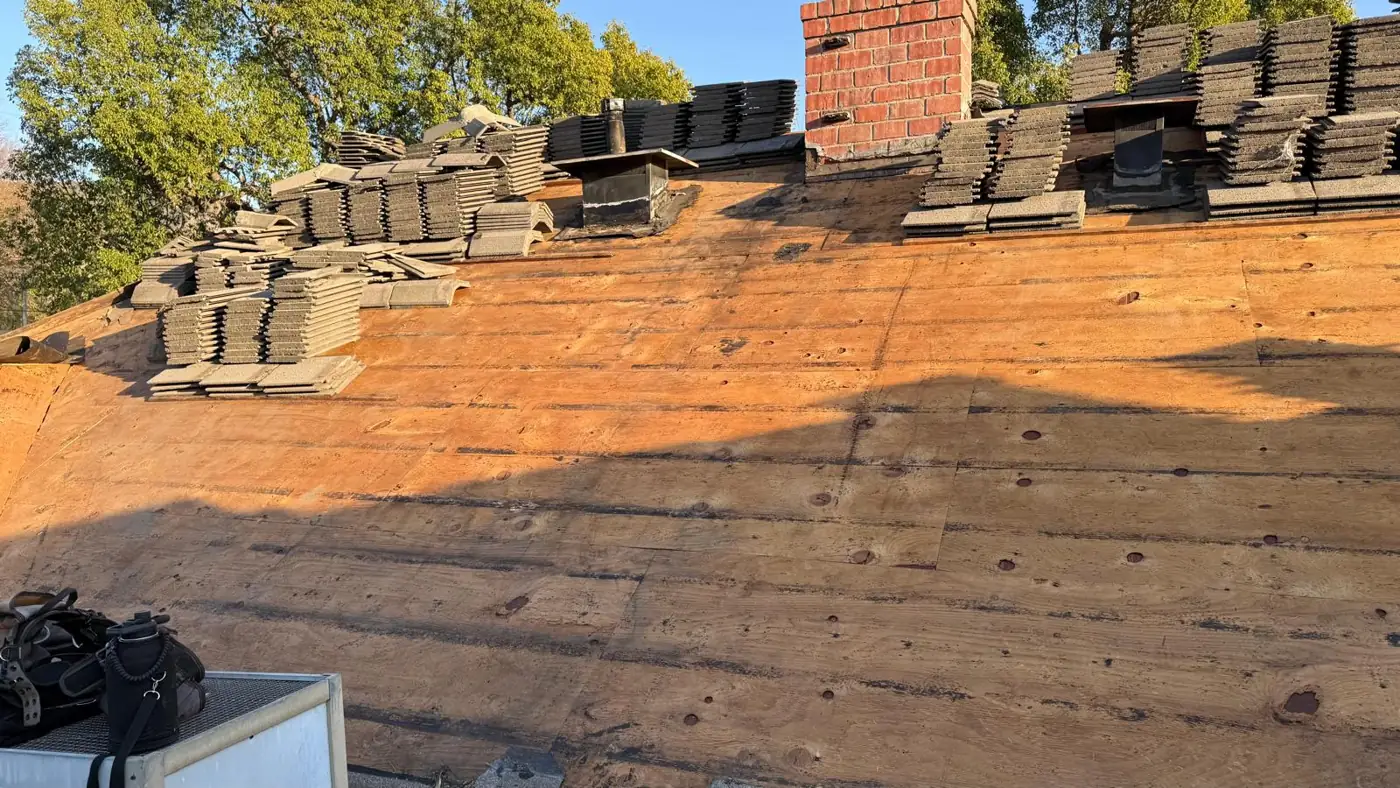
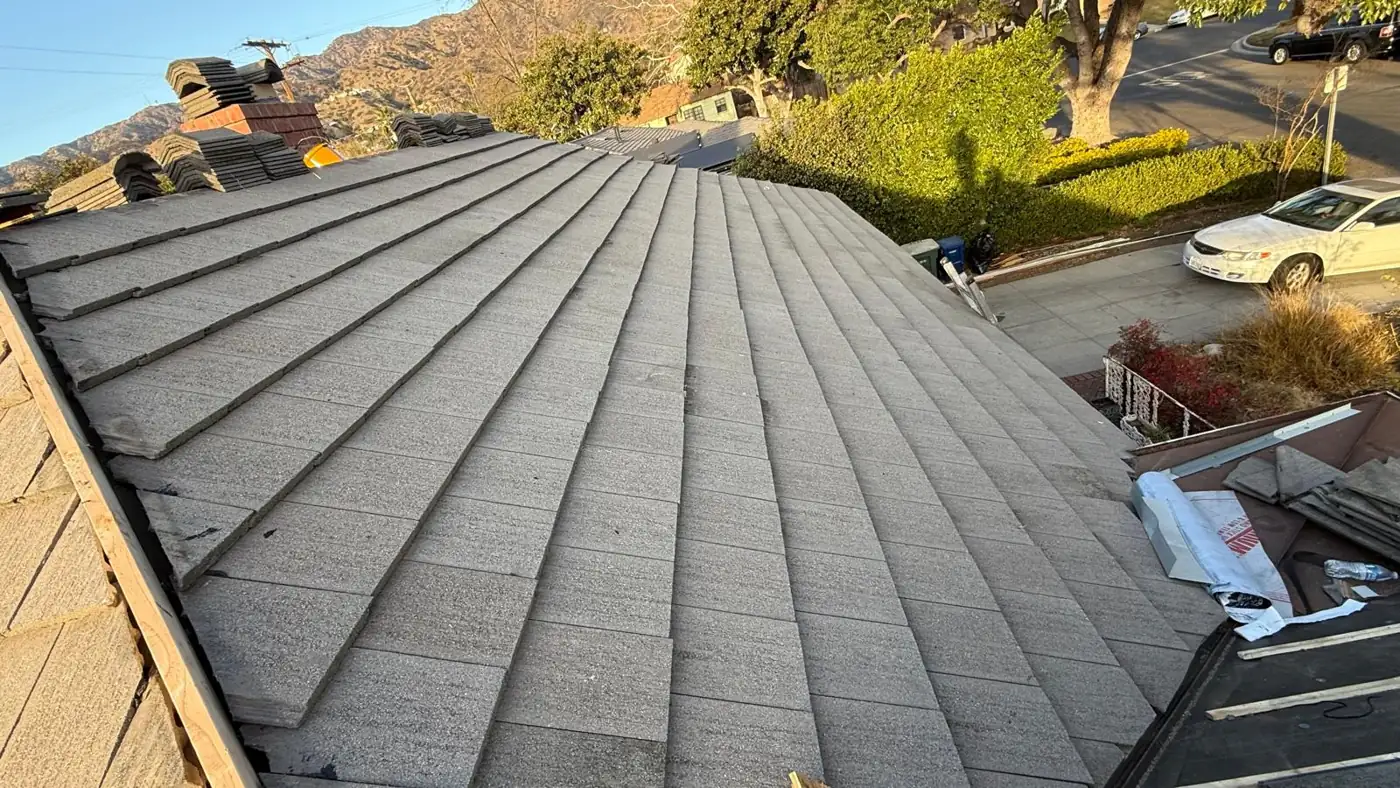
We lifted every tile and stacked it along the ridge to reuse. That exposed the old felt underlayment, which was dark, brittle and torn. It also exposed the old battens, the thin wood strips the tiles hang on.
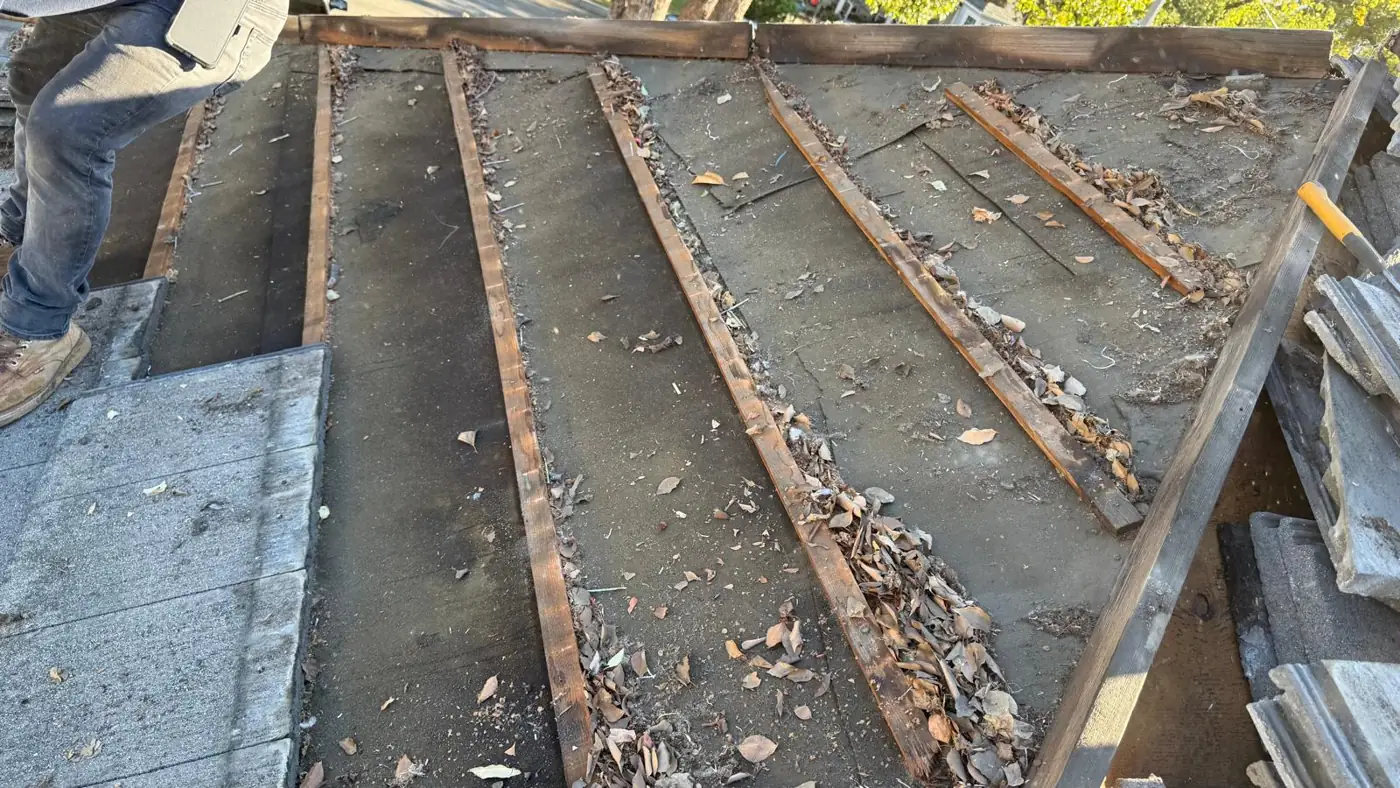
The battens told the story. Leaves and grit had packed in behind them over the years. Water that gets under tile is supposed to run down the underlayment and out at the edge. When debris piles up against a batten, it acts like a small dam. Water sits there and soaks into the felt instead of draining away.
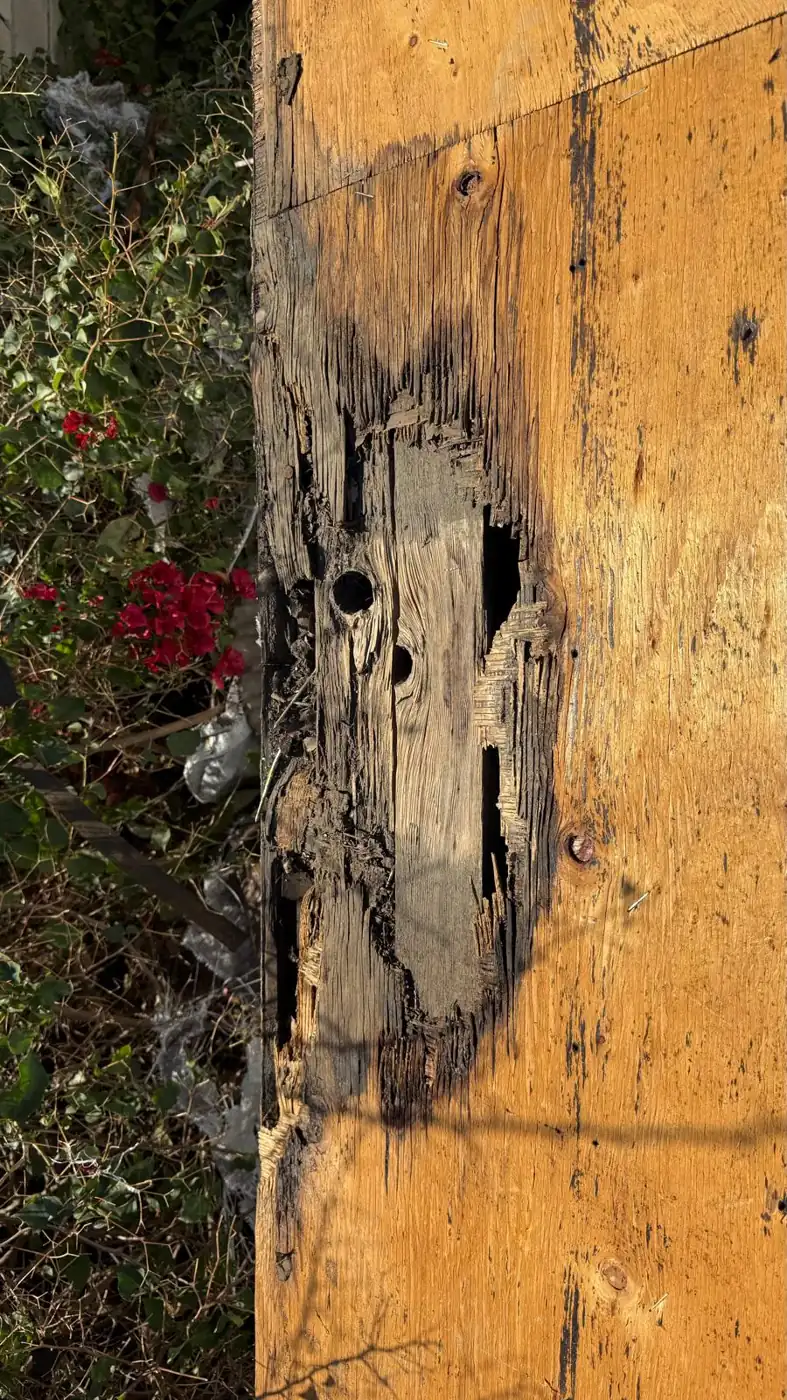
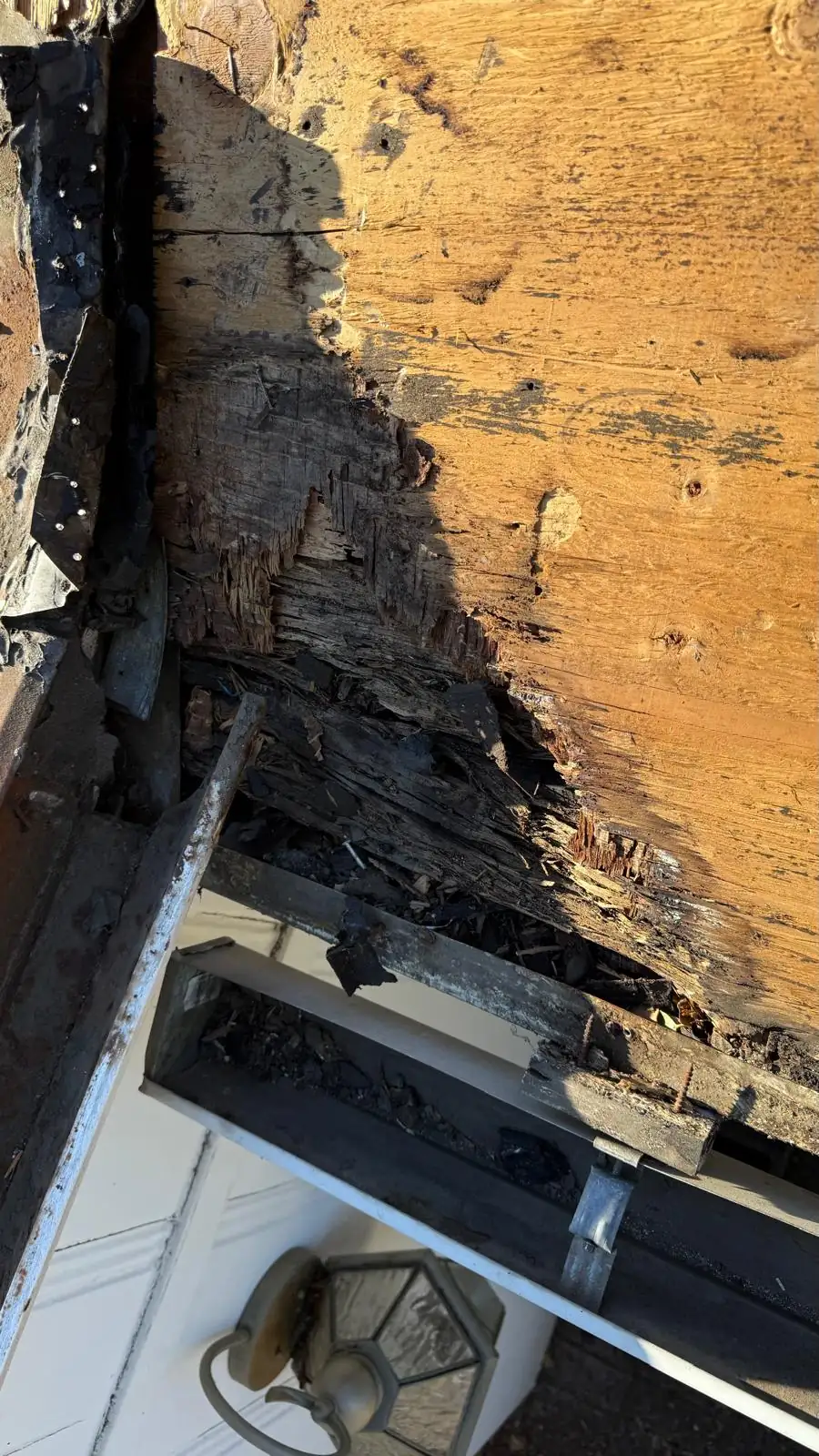
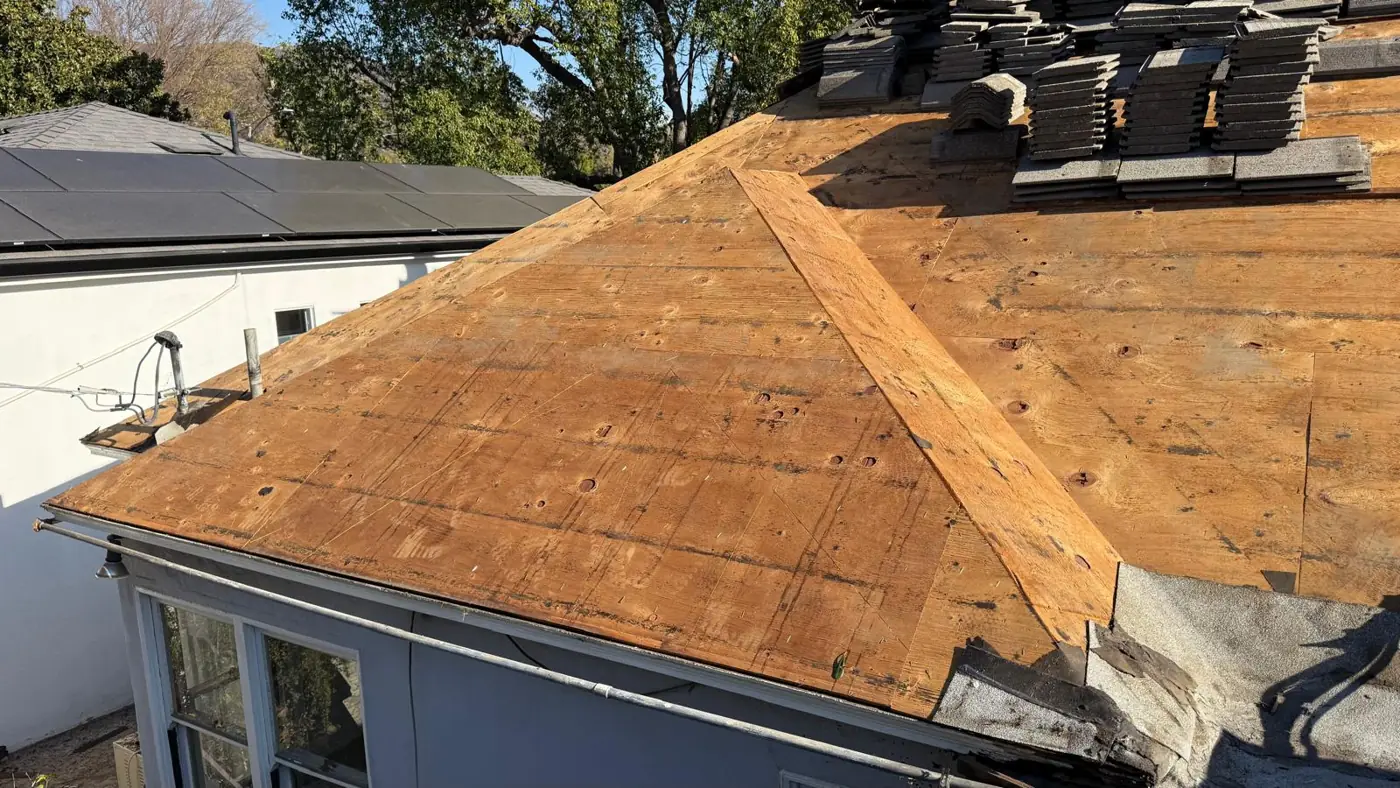
The worst damage was at the roof edges. Under the last rows of tile, the wood of the roof deck had gone soft and dark with rot. You can't see this from the ground, and you can't see it from the attic once the tile is on.
Why the edges rot first
The roof edge is where all the water that got under the tile ends up. If the underlayment is worn there, or debris is holding water back, the wood at the eave stays wet the longest. That's why we check every edge closely on a re-felt.
Our Tile Roof Underlayment Replacement In Burbank, Step By Step
- Lift and save the tile. Each tile came off by hand and was stacked on the ridge, so the whole roof could be stripped without the tile leaving the roof.
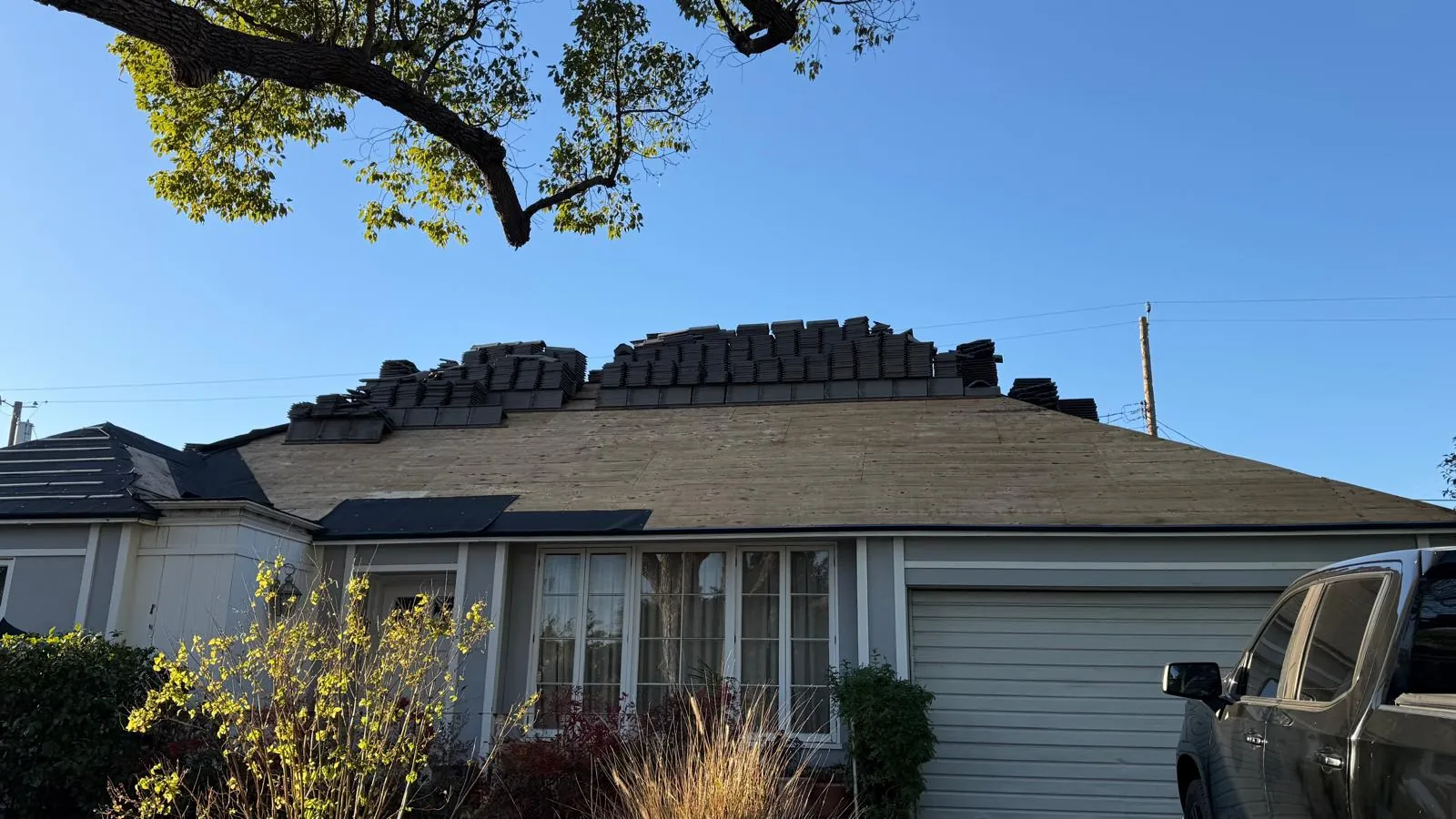
- Strip to the wood. The old felt and every old batten came off, along with the debris trapped behind them, leaving a clean plywood deck.
- Deal with the rot. The soft, rotted wood at the edges couldn't simply be covered over. It was handled before anything new went on.
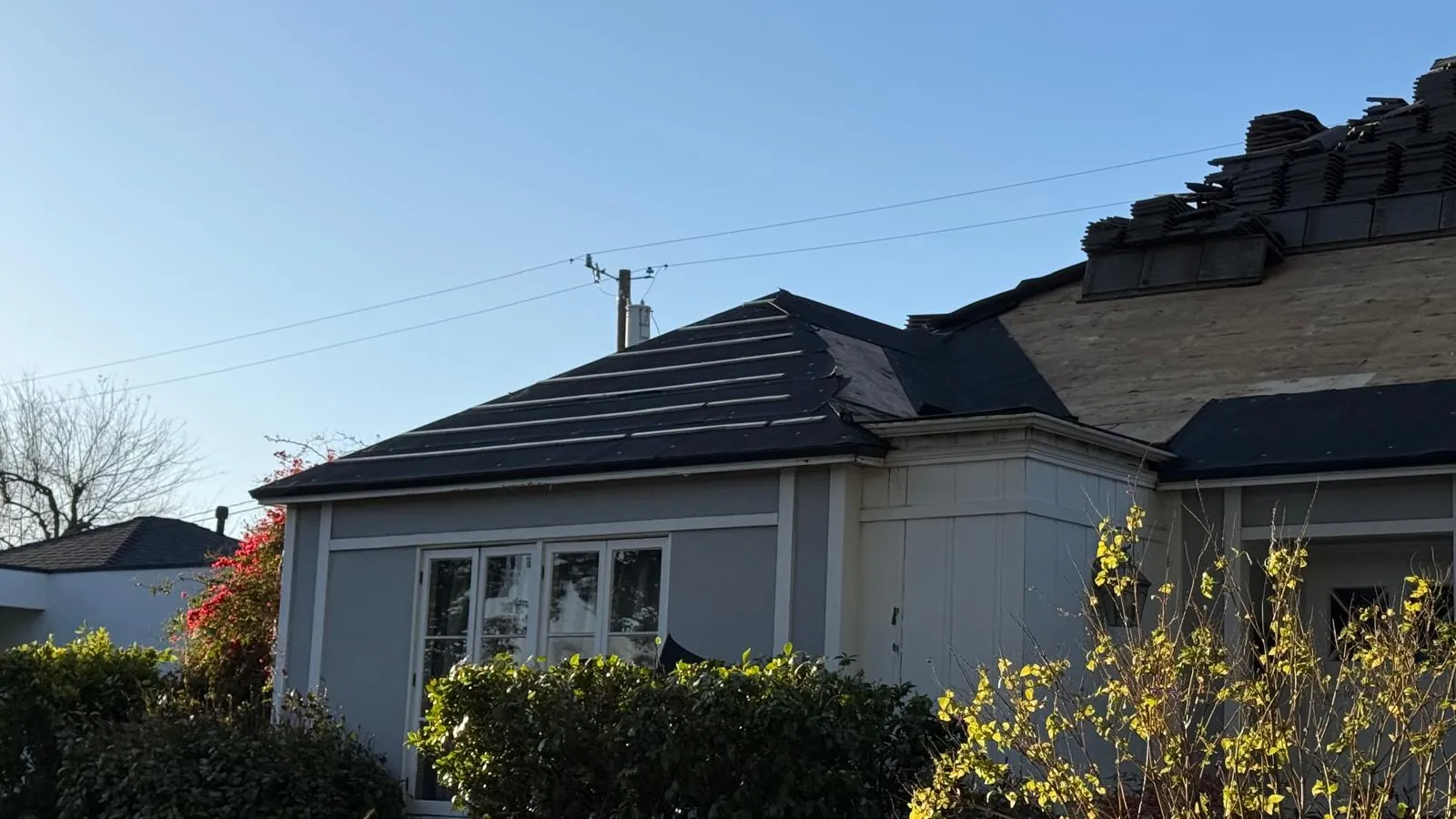
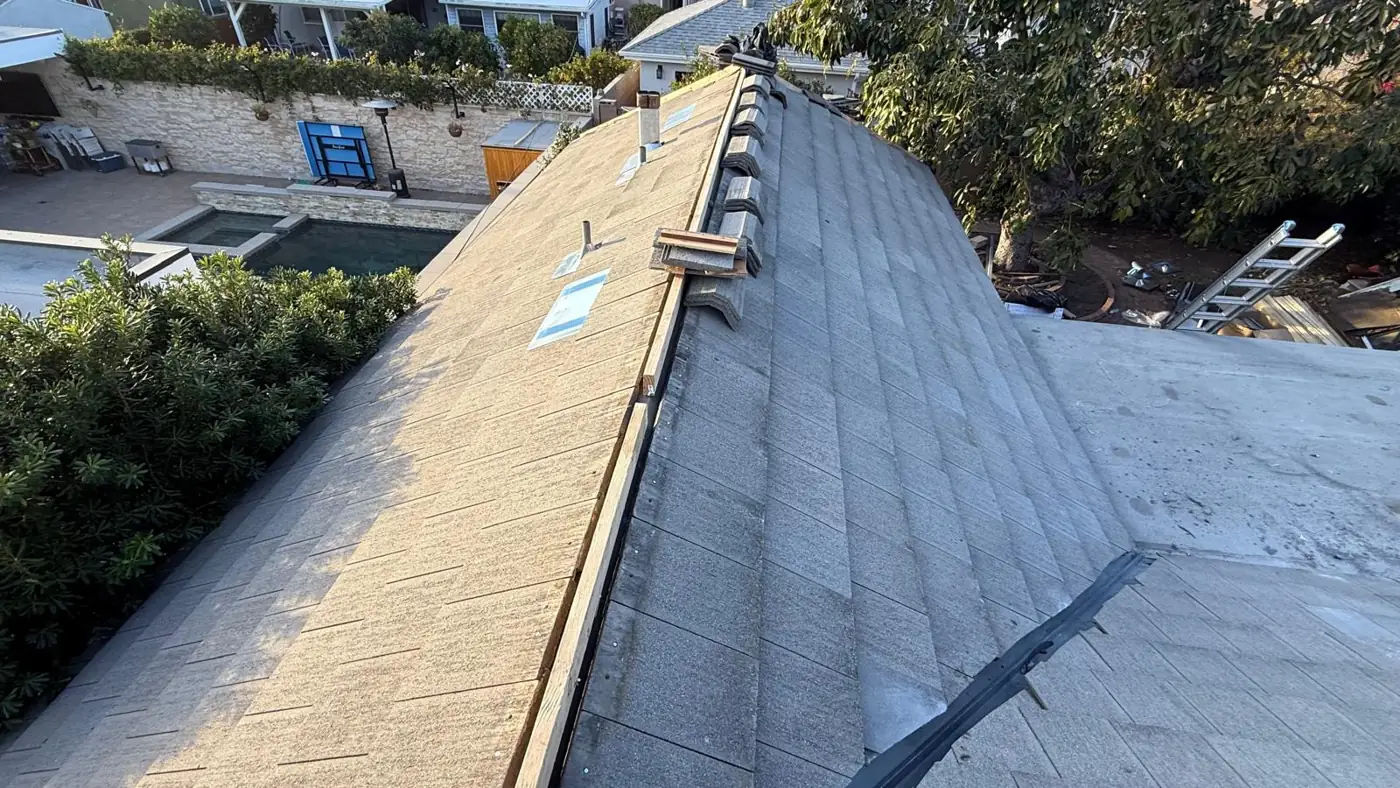
- New underlayment. A new black underlayment went over the whole deck. It's held down with cap nails, which have a wide plastic washer that keeps the sheet flat without tearing it.
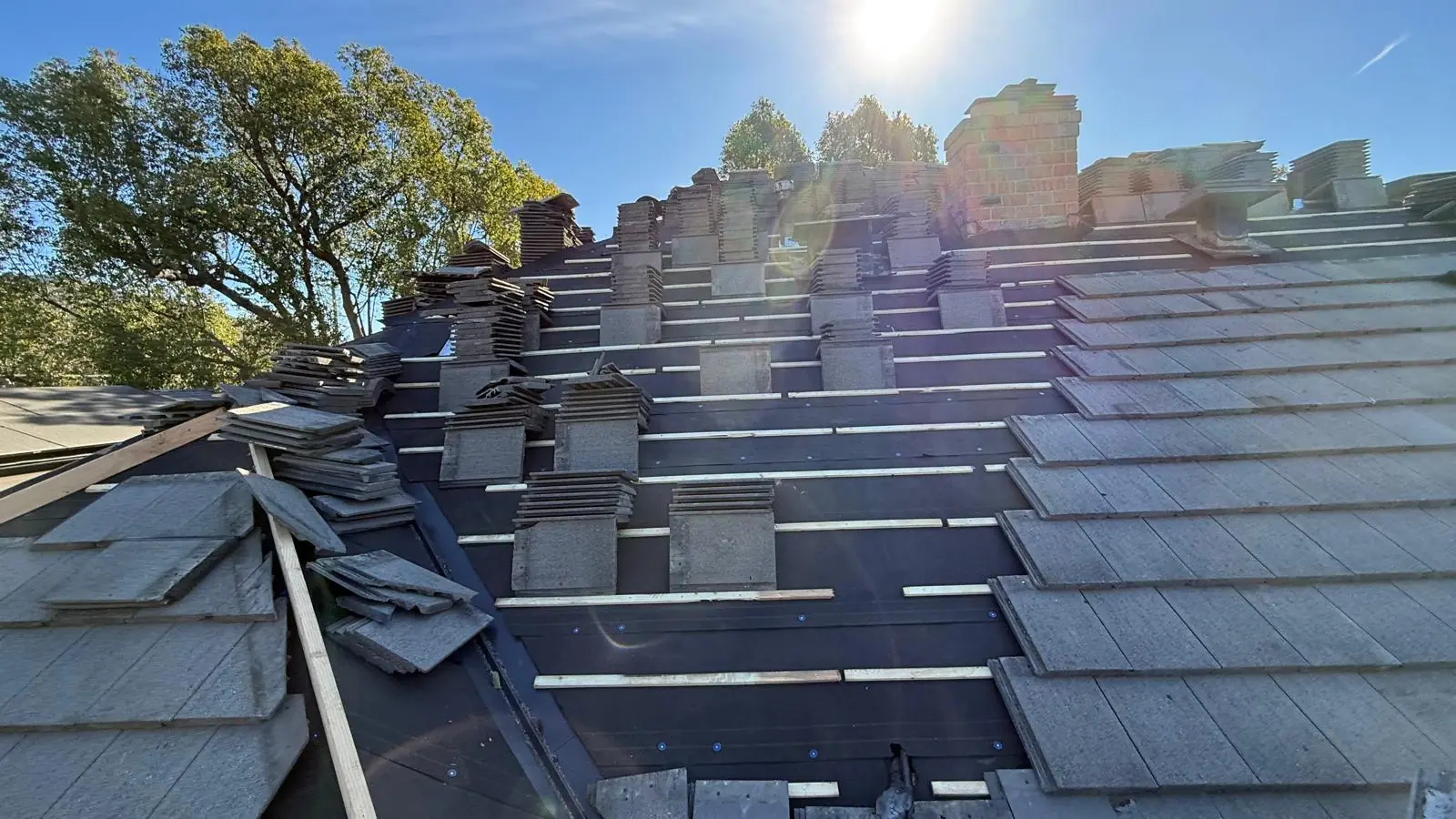
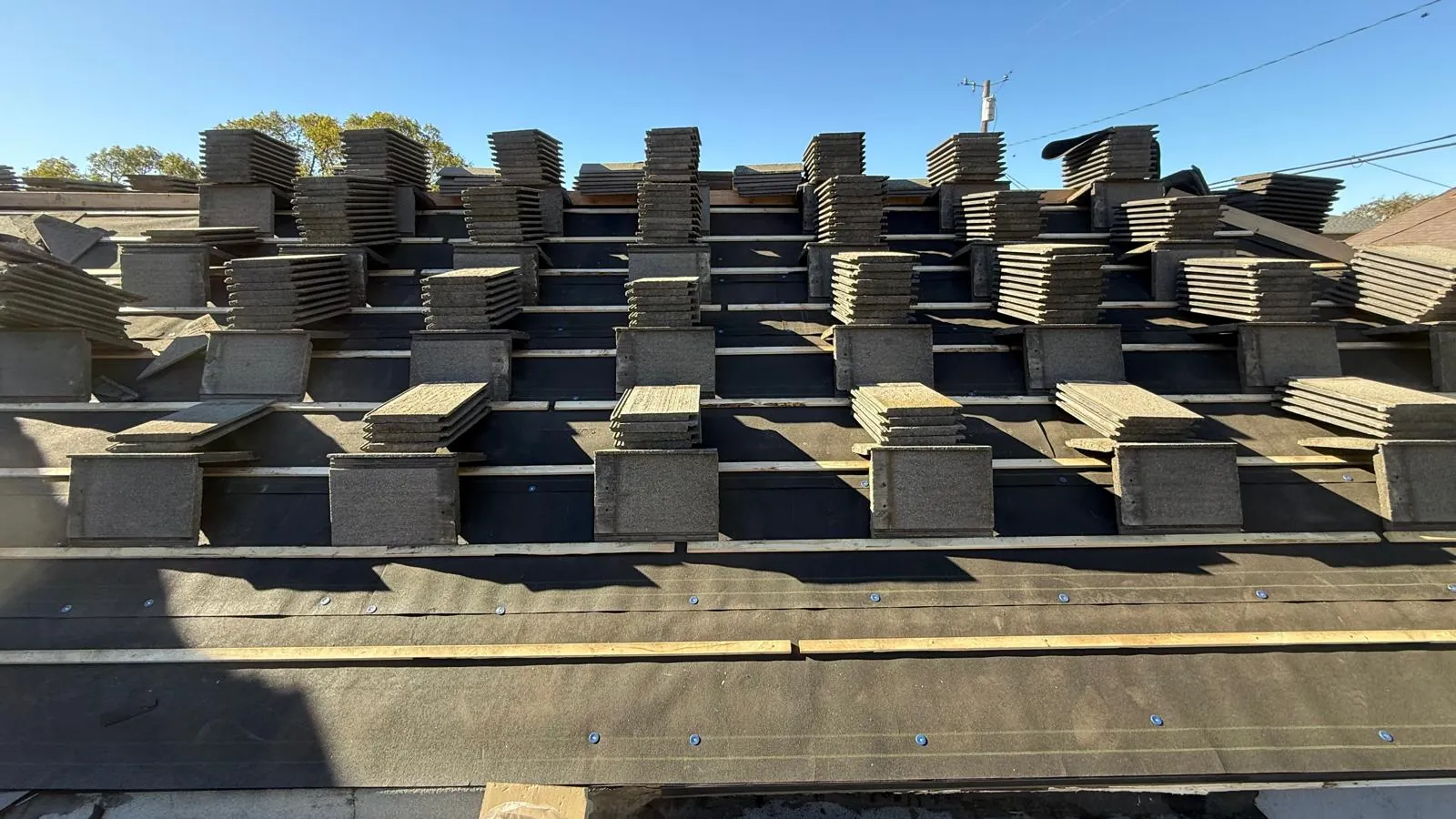
- New battens. Fresh wood battens went on in straight rows over the new underlayment, at the spacing the tile needs.
- Load and relay the tile. The original tile went back up in stacks across each slope, then was relaid row by row on the new battens.
- Flash the openings. New metal pipe flashings and a new roof vent went in where the tile meets each pipe and vent. Then the hips were capped with their ridge tiles.
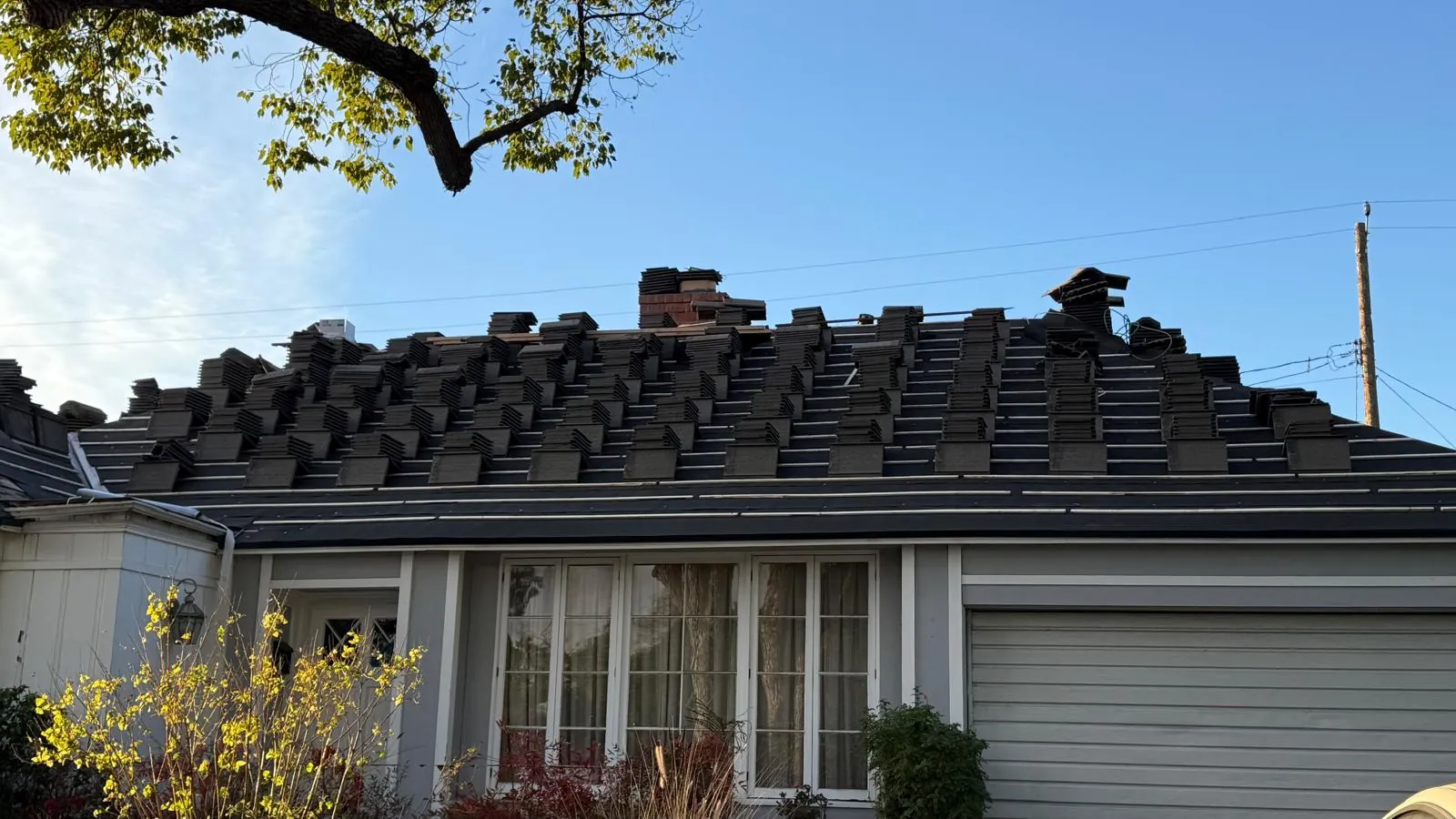
We worked one slope at a time. In the photos you can see one side finished in new underlayment and battens while the next side is still bare wood. That keeps the house protected and the open area small on any given day.
Why Replace The Battens, Not Just The Felt?
Because old battens hold the problem in place. Wood battens that have sat on a damp roof for decades are often soft, split or loose. They're also nailed through the old felt, so they come off anyway when the underlayment is replaced.
Putting the tile back on old battens would mean hanging it on the weakest wood on the roof. New battens give every row of tile a solid, straight edge to hook over. They also start clean, with no packed-in debris holding water against the new underlayment.
How Do You Know If Your Tile Roof Needs New Underlayment?
Most homeowners find out from a leak, but there are earlier signs. Here's what we look for on Burbank tile roofs:
- Leaks that move. A repair stops one drip and another shows up somewhere else. That usually means the layer under the tile is worn out everywhere, not in one spot.
- Stains near the eaves. Dark marks on the fascia boards (the trim along the roof edge) or the soffits under them mean water is reaching the wood.
- Ceiling stains with no clear cause. A brown ring on a ceiling, especially near an outside wall, often means water got past the underlayment somewhere above it.
- Tiles that have slipped. Tiles that sag or have shifted out of line can mean the battens under them have gone soft.
- Debris at the edges. Leaves and grit sitting along the bottom rows of tile, or washing out of the gutters, often means debris is also packed underneath.
- The age of the roof. If the tile has been on the house for decades and the underlayment was never replaced, it's worth having it checked.
Not sure what's under your tile?
If you see one or two of these, we'll lift a few tiles in the problem area first. You'll see photos of the underlayment before anyone talks about a full re-felt. Book a free estimate or call (818) 518-6888.
Re-Felt Or New Tile Roof?
| Tile re-felt (this job) | New tile roof | |
|---|---|---|
| What gets replaced | Underlayment, battens, flashings and any damaged wood | The tile and everything under it |
| How the house looks after | The same as before | A new tile color or style |
| Best when | The tile is solid and the leaks come from underneath | Many tiles are cracked, or you want a new look |
| What happens to the old tile | It goes back on the roof | It's hauled away |
On this home the choice was easy. The flat concrete tile was solid and still matched across the whole roof. A re-felt gave the owners a new waterproof roof without changing how the house looks from the street.
Is A Re-Felt Cheaper Than A New Tile Roof?
Usually, yes, because you keep the most expensive part of the roof: the tile. Most of the cost of a re-felt is labor to lift and relay the tile. The rest is new underlayment, new battens and any wood repairs. A new tile roof adds the price of all-new tile on top of that.
The exact number depends on the size and shape of the roof and on what's under the tile. Nobody can know that until a few tiles come up. That's why we look before we quote. Your free estimate spells out what's included, line by line.
Do You Need A Permit For A Tile Re-Felt In Burbank?
Burbank runs its own Building & Safety Division, separate from the City of Los Angeles. Roofing work here goes through City of Burbank permits and inspections. Rules can change and can depend on the address, so check with the city or ask us during your estimate. When we re-roof in Burbank, we pull the permit and schedule the inspections for you.
Burbank Homes And Tile Roofs
Burbank's housing is older than most people expect. Census data puts the median year built for Burbank's homes at 1959, and about half were built before 1960 (U.S. Census Bureau, ACS 2020–2024). Plenty of those post-war ranch homes have concrete tile that has outlived its first or second underlayment, just like this one.
That's good news for owners, because the expensive part of a tile roof, the tile, is often still usable. We saw the same thing on a two-story tile re-felt in Agoura Hills, where the original tile went back on over a new fire-rated layer.
Have A Tile Roof That Keeps Leaking?
We re-felt and repair concrete and clay tile roofs across the San Fernando Valley, including Burbank and nearby cities like Glendale and Toluca Lake. If you're not sure whether a repair will hold, see our roof and leak repair service or book a free estimate. We'll look at what's under your tile and tell you whether a repair or a re-felt makes more sense.
Roofing Terms On This Page
Plain-English meanings of the trade terms used above.
- Re-felt
- Lifting the tiles off a roof, replacing the worn waterproof layer under them, and laying the same tiles back.
- Underlayment
- The waterproof sheet between the tiles and the wood. It stops the rain that slips past the tiles.
- Battens
- Thin wood strips nailed across the roof. Concrete tiles hook over them so each row hangs in place.
- Roof deck
- The layer of wood boards or plywood that the whole roof is built on.
- Flashing
- Shaped metal that seals the gaps around pipes, vents, chimneys and roof edges.
- Hip
- The outside ridge where two sloped sides of a roof meet at an angle.
More Project Photos
Tap any photo to see it larger.
During The Job 9
After 1
Details 2