On This Page
- What Does A Tile Roof Replacement In San Marino Involve?
- Why Shake-Style Concrete Tile?
- Why Is The Tile Spread Across The Roof Before It's Laid?
- The Hardest Parts Of This Roof
- Does A Concrete Tile Roof Need Maintenance?
- New Tile Roof Or Tile Re-Felt?
- Do You Need A Permit For A New Roof In San Marino?
- San Marino Homes And Tile Roofs
- Thinking About A Tile Roof?
- More Project Photos
- Roofing Terms
The Problem
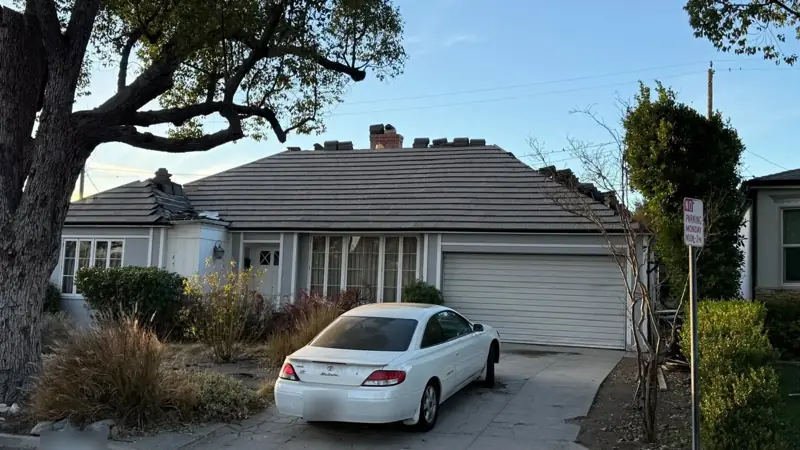
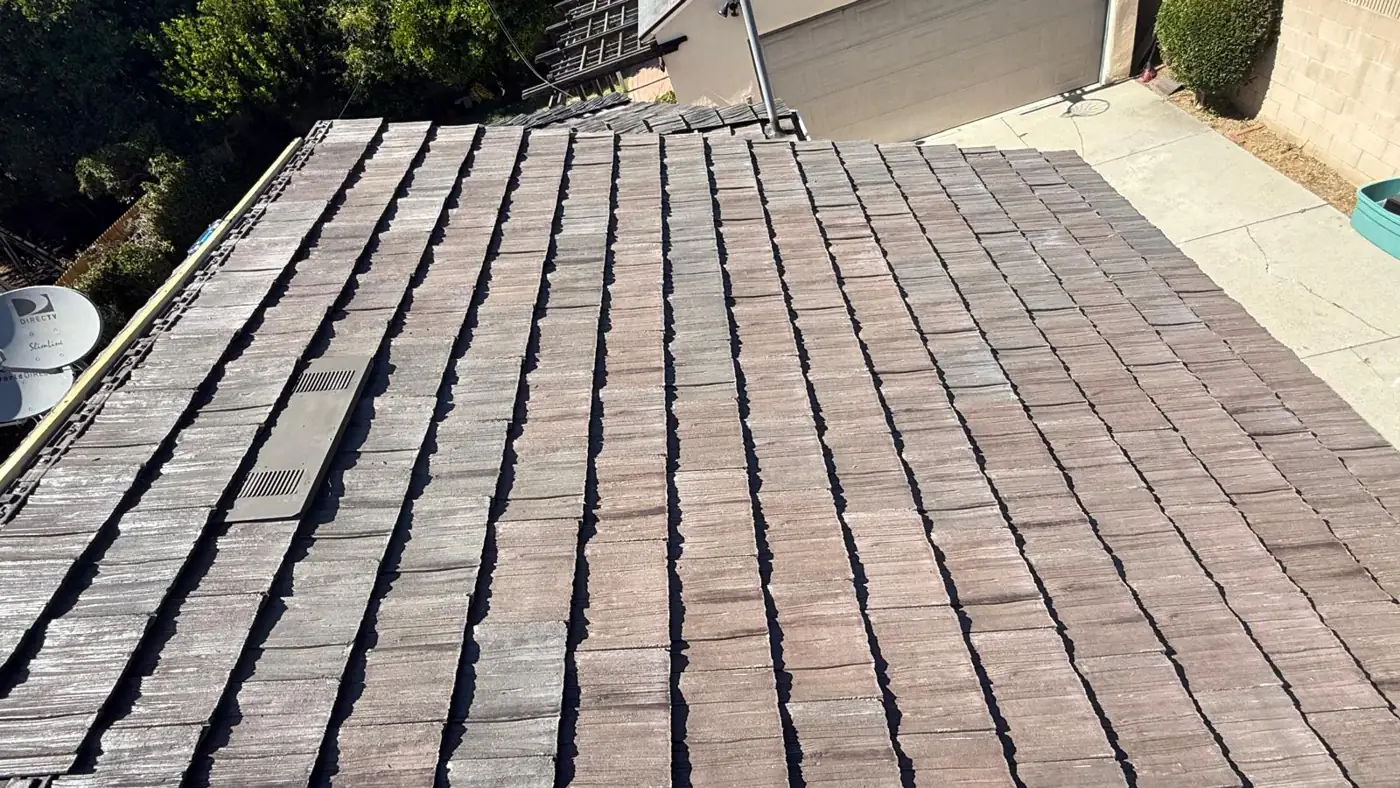
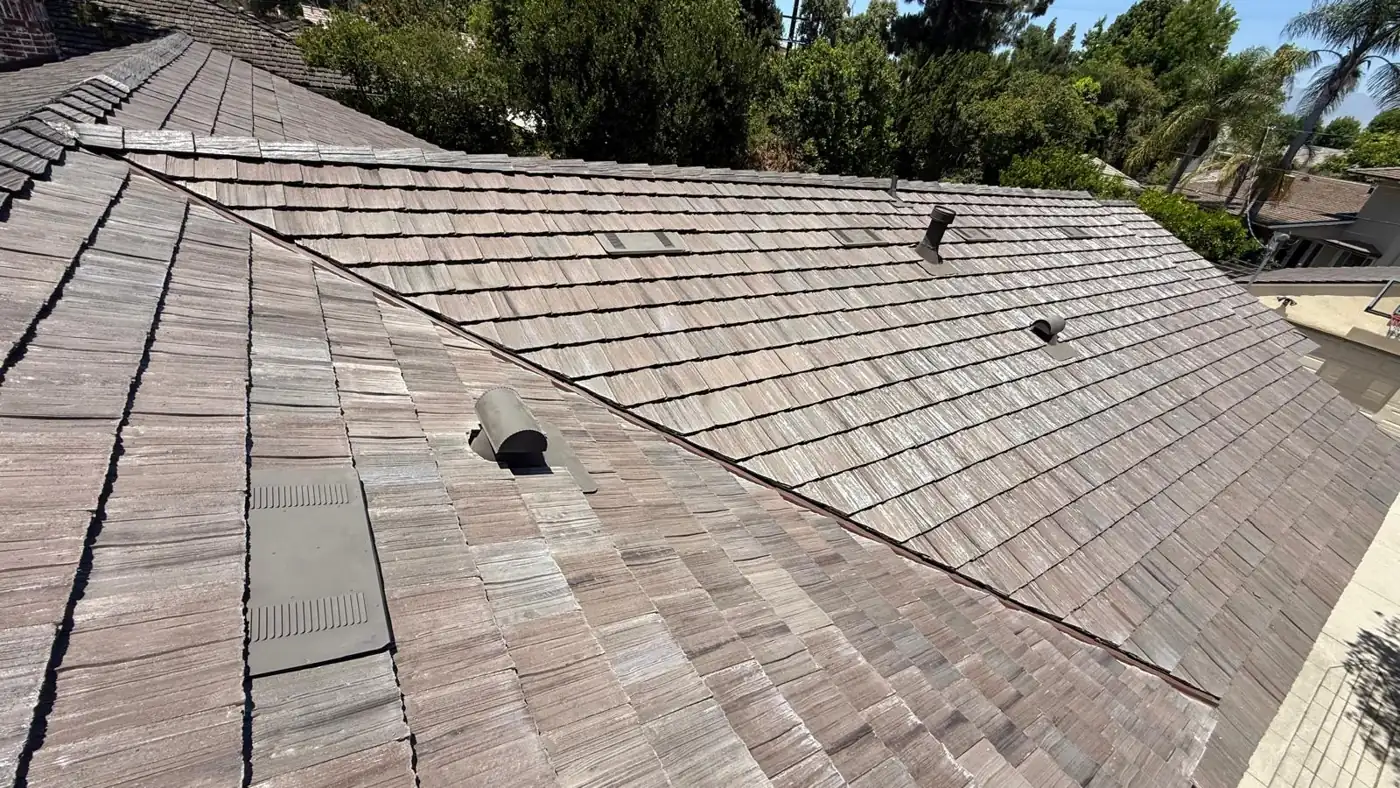
The home needed a new roof, and the owners chose new concrete tile with the look of wood shakes.
What We Did
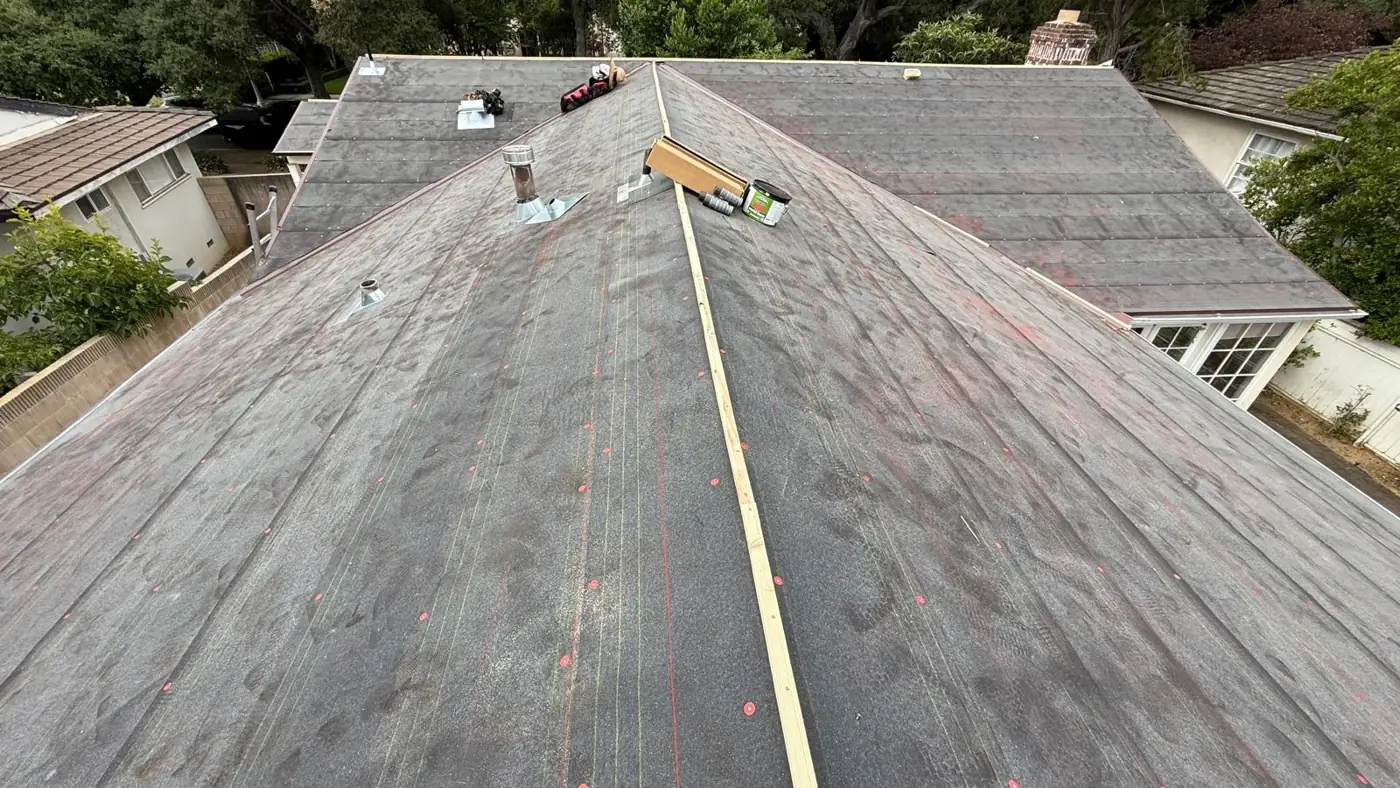
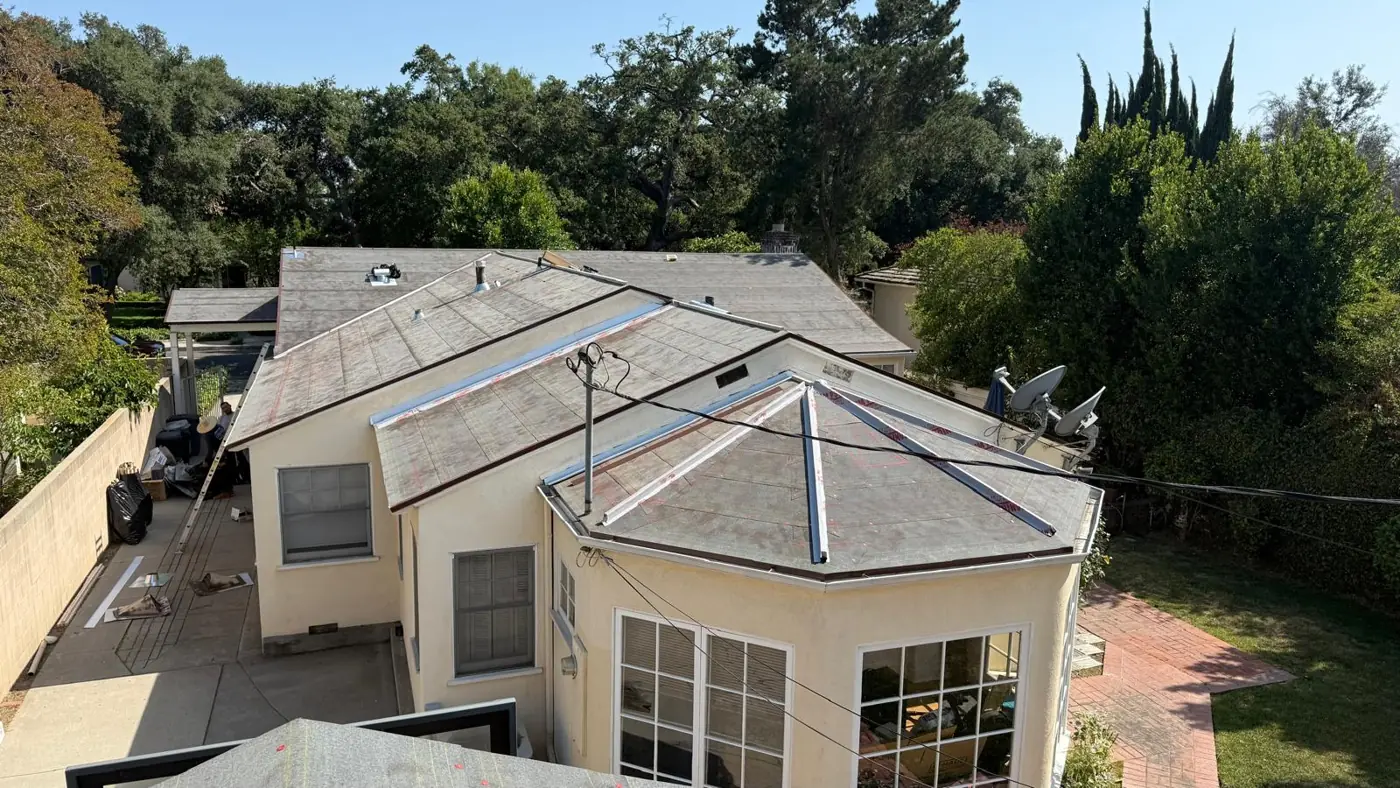
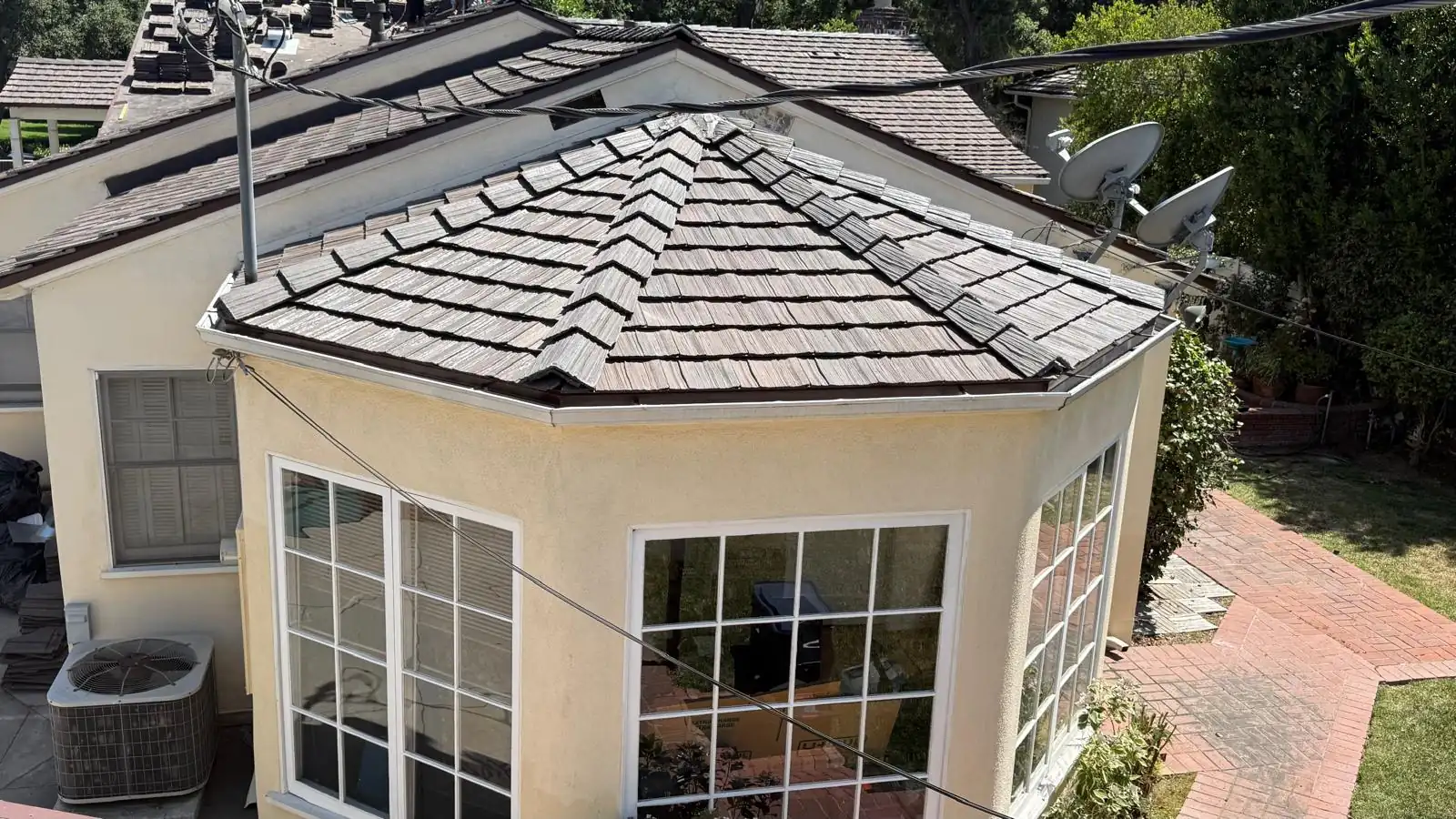
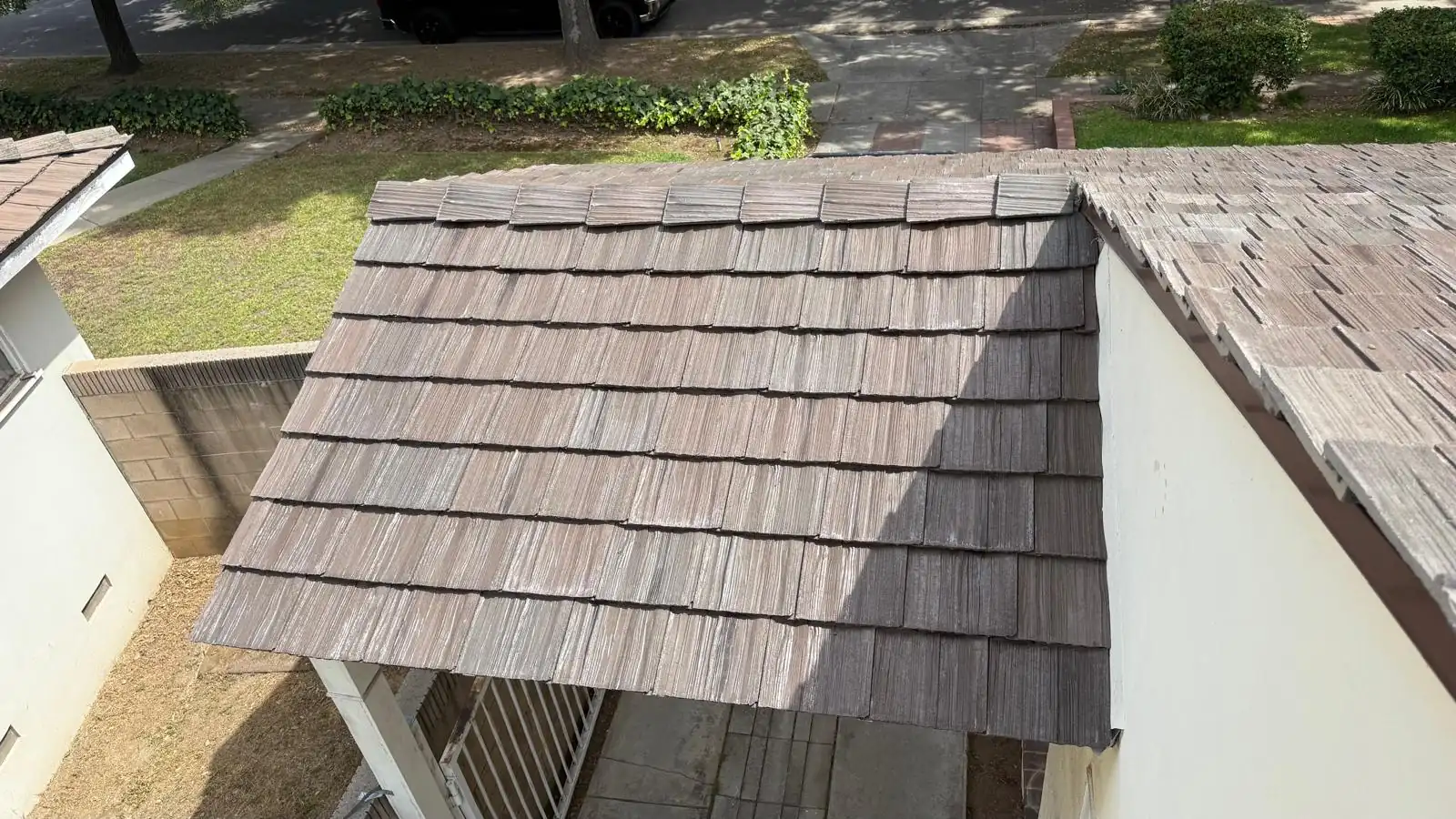
We sealed the whole roof in new underlayment, snapped chalk lines and set wood nailers for the hips, installed metal valleys and new chimney flashing, then laid new shake-style concrete tile across every wing, the bay roof and the porch.
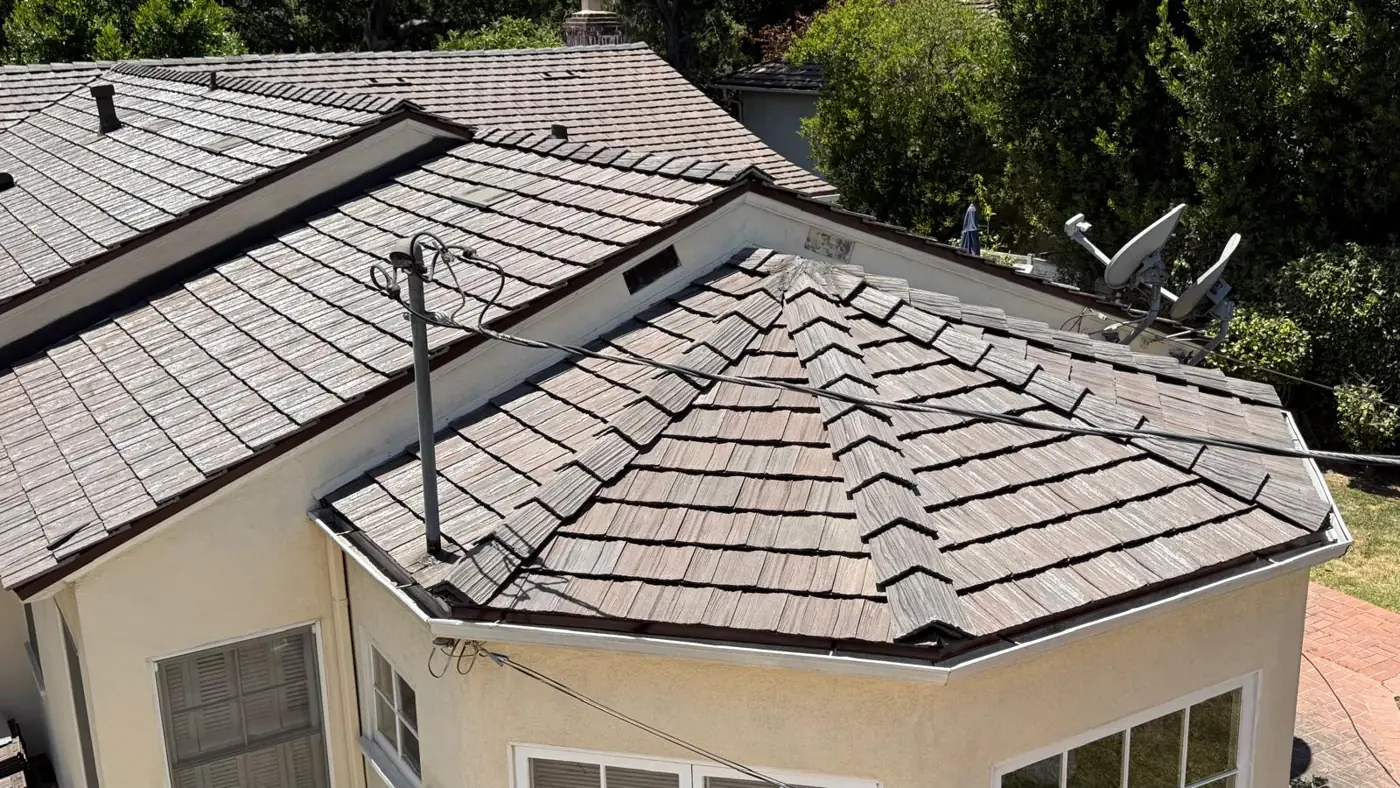
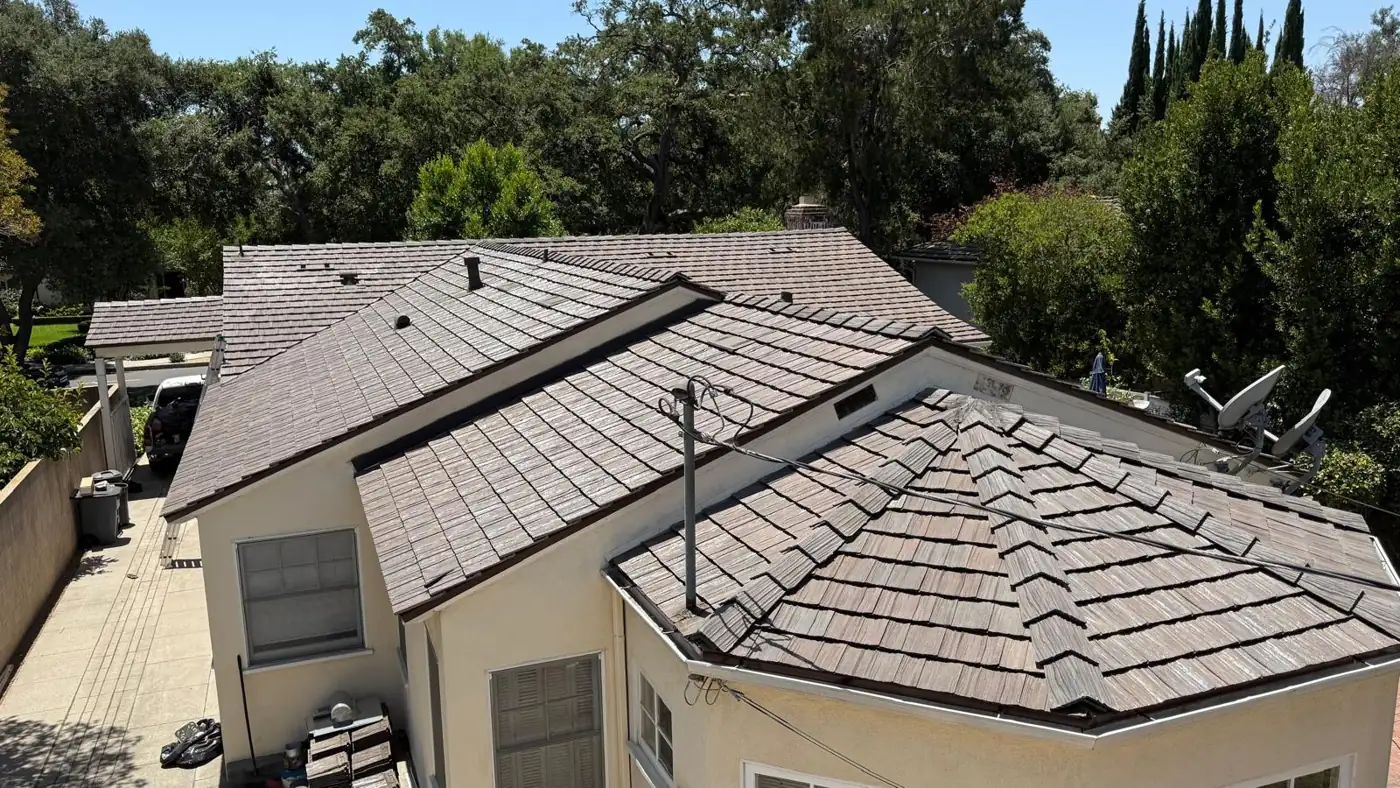
A tile roof replacement in San Marino means a new roof from the wood up: new underlayment, metal valleys and flashing, then new tile. On this home we installed shake-style concrete tile in a warm cedar tone. Every part of the roof got it, including several wings, an eight-sided bay over the back windows and a small porch roof.
What Does A Tile Roof Replacement In San Marino Involve?
A concrete tile roof installation is built in layers, and most of the work happens before the first tile goes down. The order matters, because each layer protects the one under it.
- New underlayment over the whole roof. The entire roof was sealed in new underlayment first. In the photos, the house sits under a smooth dark layer before any tile arrives, which means it stayed watertight through the whole install.
- Layout lines. We snapped chalk lines across every slope. Tile looks right only when every row runs straight and evenly spaced, and on a roof with this many angles, that starts with the layout.
- Hip nailers. Wood strips went up along each hip. The hip tiles get fastened to these, so the angled edges of the roof end up straight and solid.
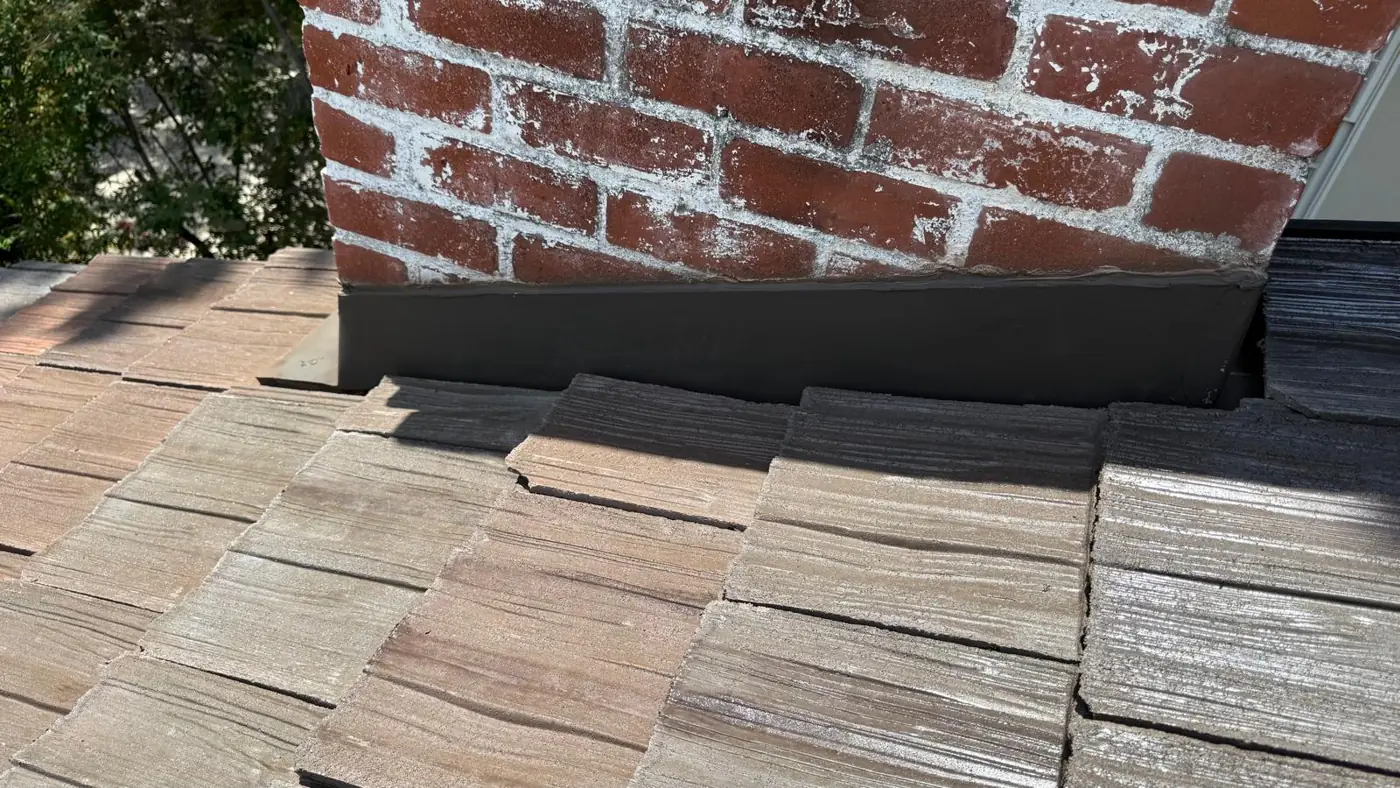
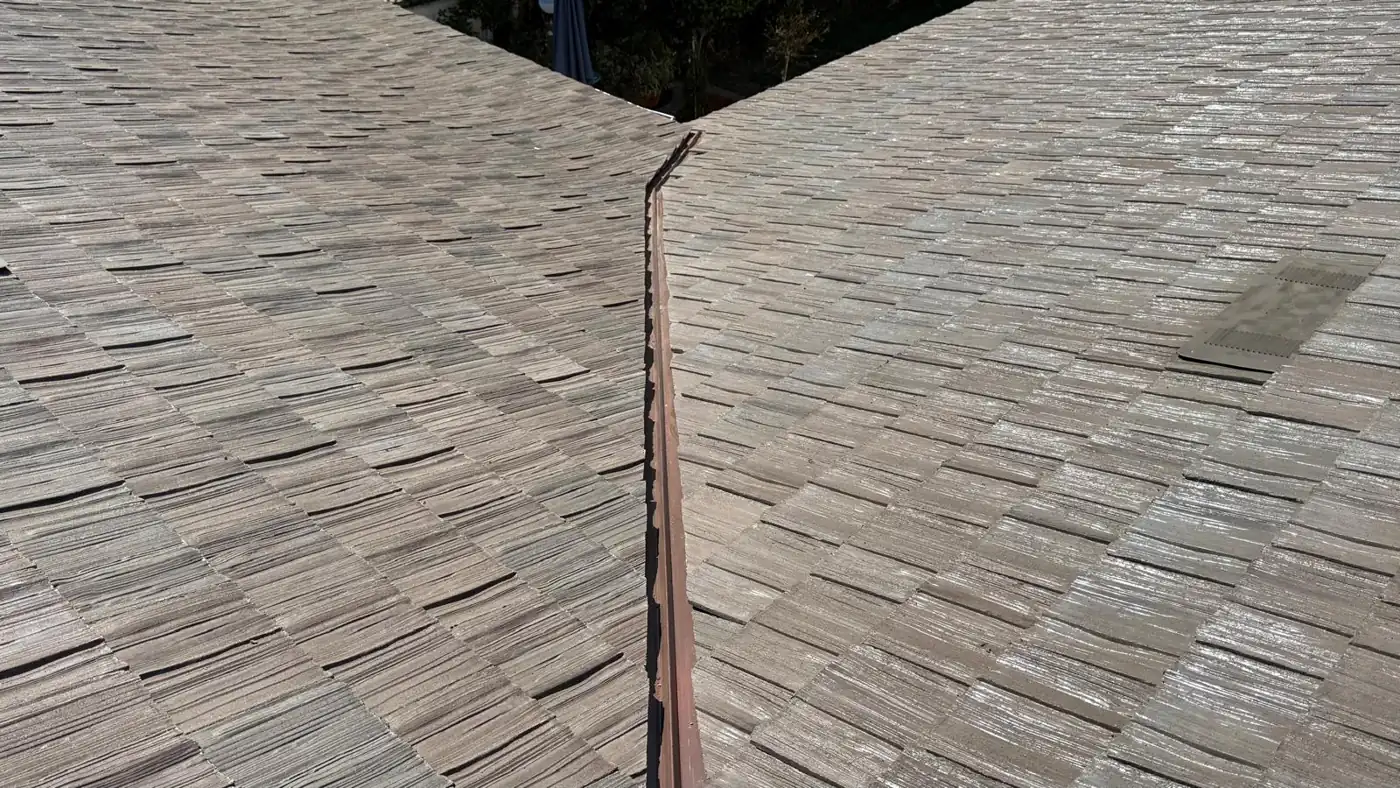
- Metal valleys and flashing. Each valley was lined with metal, and the brick chimney got new metal flashing at its base.
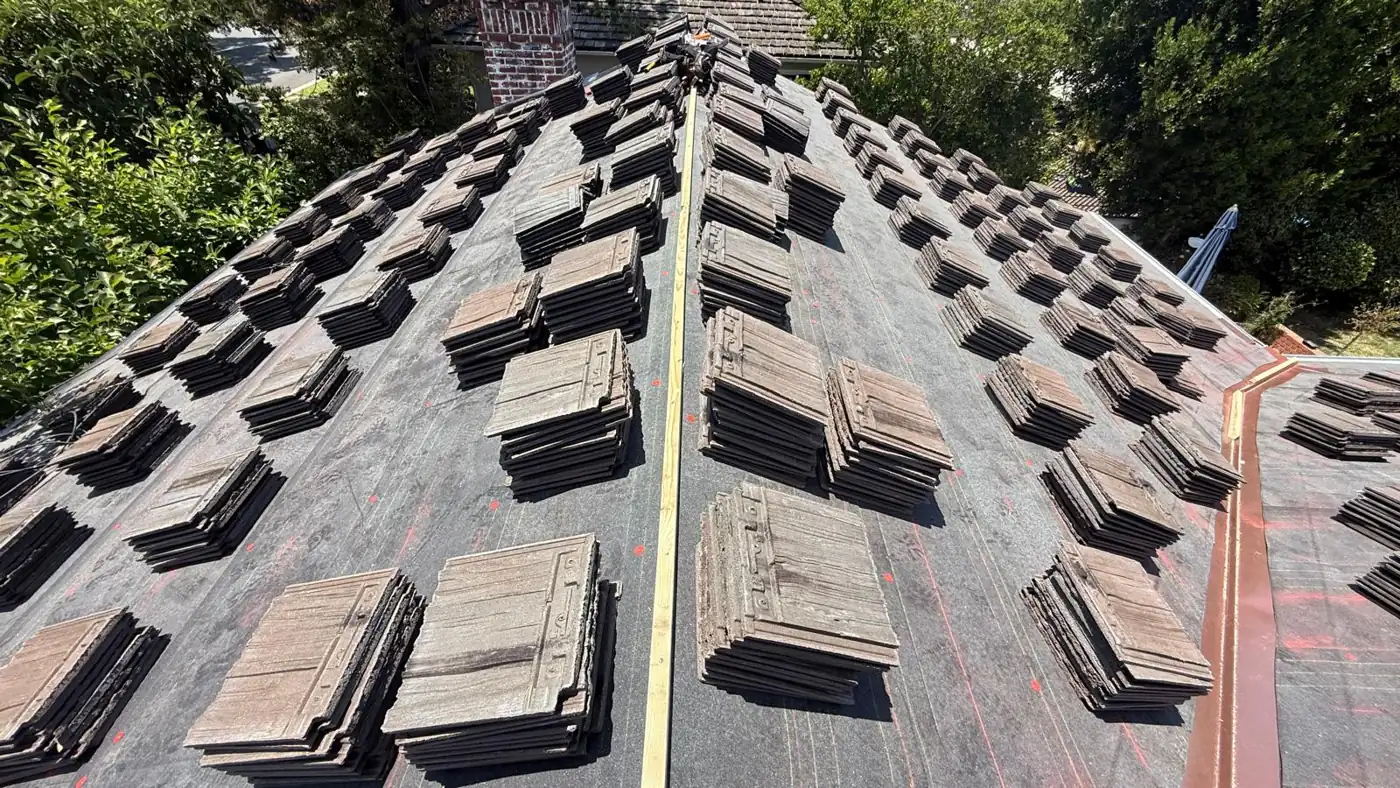
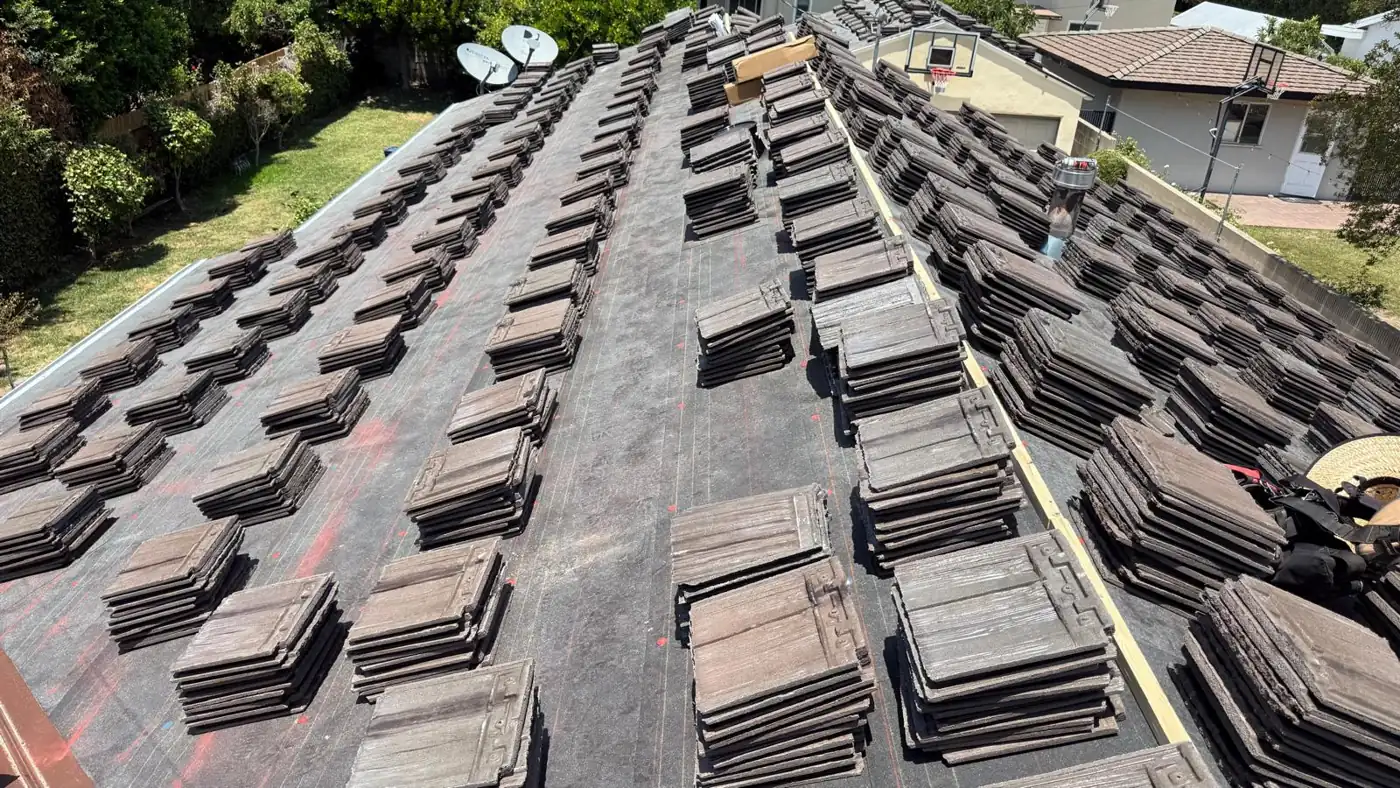
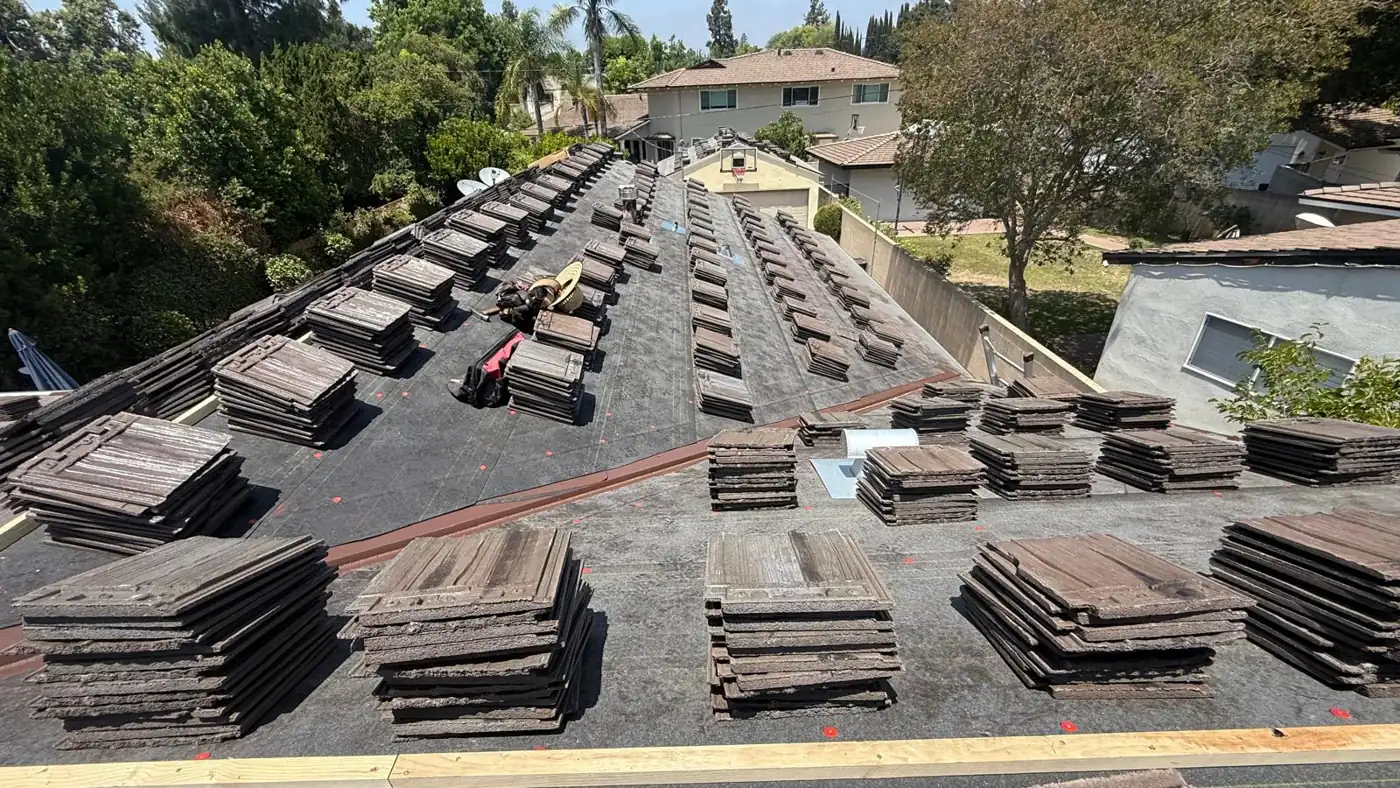
- Load the tile. The new tile went up in stacks spread across each slope, ready to lay.
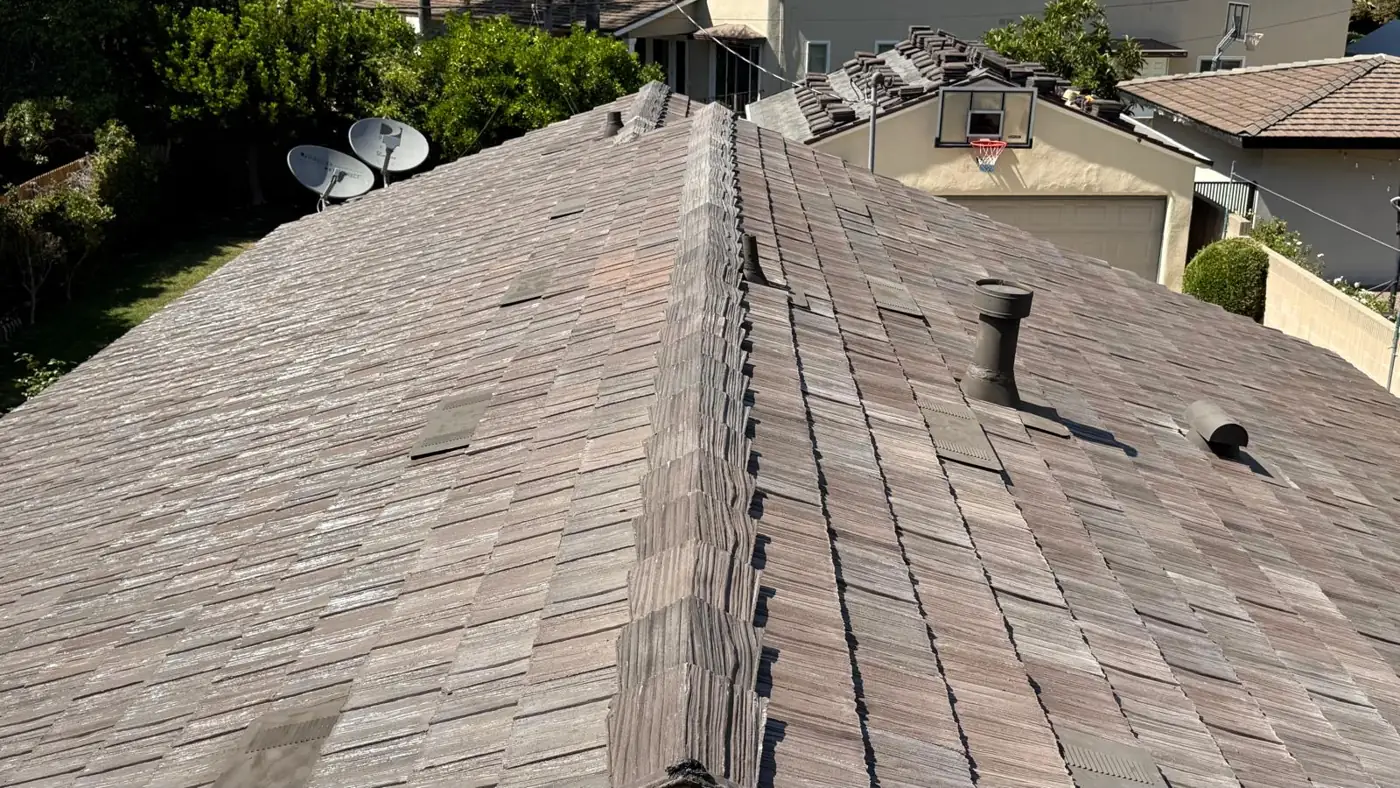
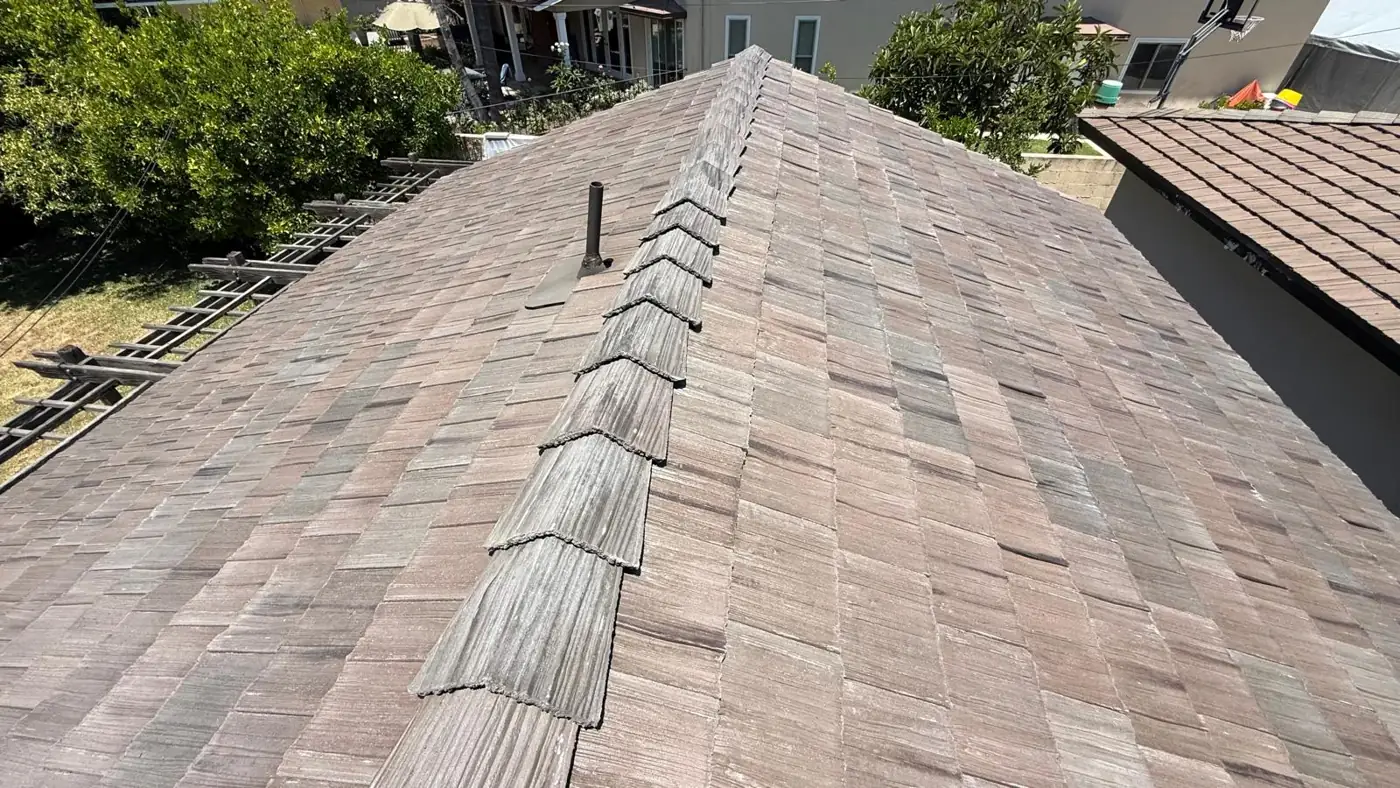
- Lay the tile, then the hips and ridges. Rows of tile went on from the bottom up, followed by the hip and ridge tiles that cap every peak.
Why Shake-Style Concrete Tile?
Shake-style tile is concrete made to look like split cedar shakes. You get the rough, layered look of a wood roof, with heavy concrete instead of wood. The tile on this job is a warm, multi-tone brown, called "Cedar Light" in the job notes. From the street, it reads like weathered cedar.
That look suits an older home like this one. Concrete doesn't rot, split or curl the way wood shakes do as they age, and it doesn't feed a fire the way wood can.
The tile also comes with matching hip and ridge pieces. That's what makes the finished roof look like one piece instead of new tile with mismatched trim.
Why Is The Tile Spread Across The Roof Before It's Laid?
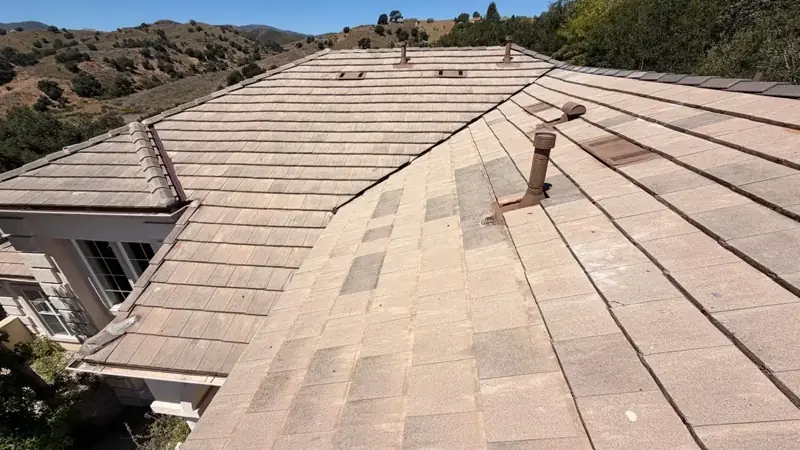
Because concrete tile is heavy, and the roof should carry that weight evenly. If all the tile sat in one pile, that part of the roof would carry far more than it was built for. Spreading the stacks across each slope keeps the load even, and it also puts the tile right where the crew will lay it.
You can see this in the photos: rows of small stacks running up every slope, each one beside the chalk lines where it will go.
Switching to tile from a lighter roof?
Concrete tile weighs much more than shingles. If your house has never had a tile roof, the framing has to be checked before tile goes on. Ask about it during your estimate, so you know up front whether any changes are needed.
The Hardest Parts Of This Roof
On a simple roof, laying tile is mostly repetition. This one had a few spots that take real care.
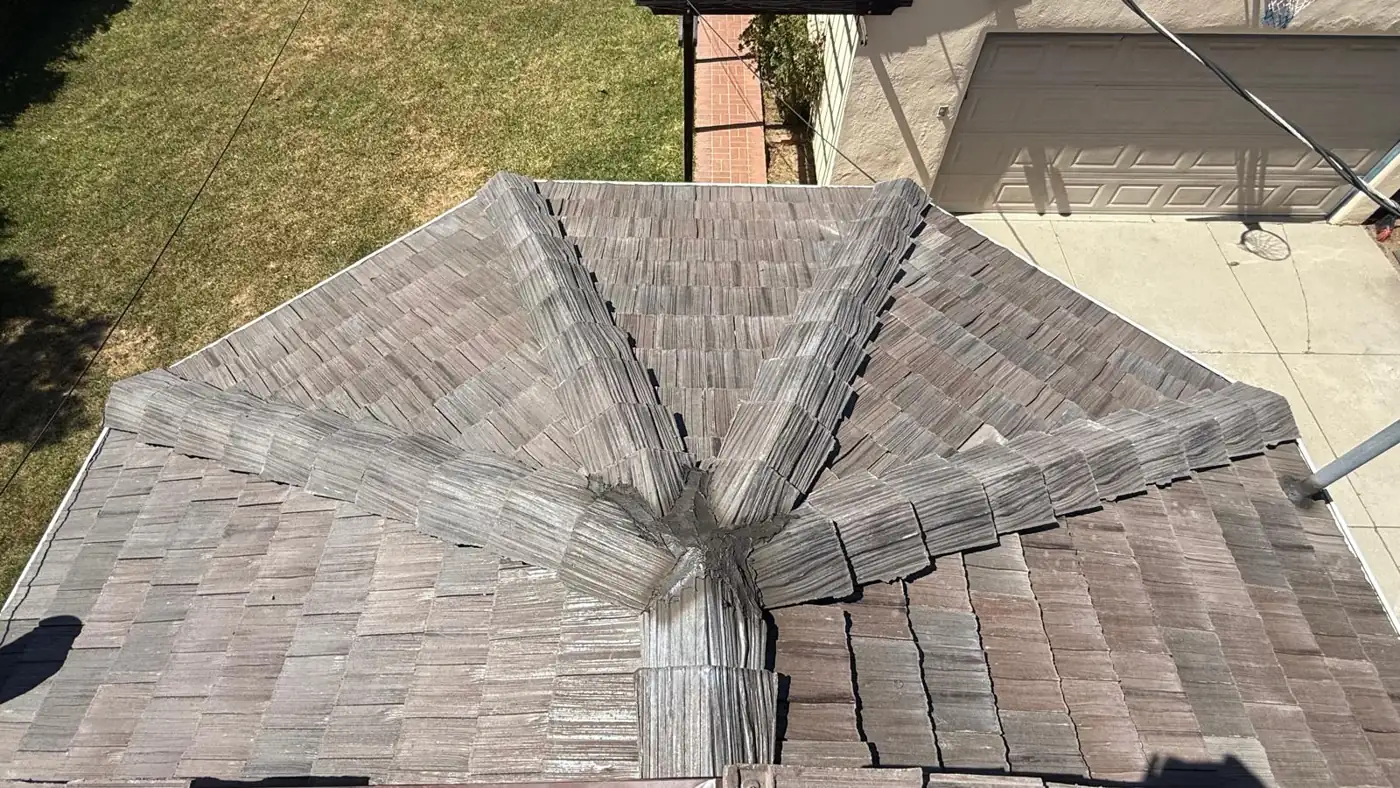
- The eight-sided bay. The bay roof over the back windows has eight hips meeting at one peak. Every tile on it has to be cut to fit the angle, and the hip tiles have to meet cleanly at the top.
- Valleys. Valleys carry rain from two slopes at once, so they're where a tile roof is most likely to leak. Each valley here got metal underneath, with tile cut neatly along both sides so water runs straight down the middle.
- The chimney. Where a roof meets a brick chimney is one of the most common leak points on any house. New metal flashing at the base seals that joint.
- The porch roof. The small porch roof got the same tile as the main roof, so the whole house matches.
Does A Concrete Tile Roof Need Maintenance?
Not much, but some. Concrete tile can last for decades, and a single cracked tile can usually be swapped out without touching the rest of the roof. The catch is color. Concrete tile fades slowly in the sun, so a brand-new replacement tile can stand out next to tile that has been up for years.
Our tip: keep a few spare tiles from the original job, stored flat in the garage. If a tile ever cracks, the spare comes from the same color batch. It will look closer to the rest of the roof than tile bought years later.
It's also worth keeping leaves out of the valleys and gutters. Debris that piles up in a valley holds water against the roof. We found the same problem under the old battens on a Burbank tile roof.
New Tile Roof Or Tile Re-Felt?
Not every tile roof needs new tile. If your tile is solid and still matches, you can often keep it. A re-felt replaces only the layers under the tile.
| New tile roof (this job) | Tile re-felt | |
|---|---|---|
| What changes | New tile, underlayment, valleys and flashing | New underlayment and flashing, same tile |
| How the house looks after | A new color and style | The same as before |
| Best when | You want a new look, or the old roof can't be reused | The tile is solid and the leaks come from underneath |
We did re-felts on concrete tile roofs in Burbank and Agoura Hills, where the original tile went back on. Here the owners wanted new tile, so the whole roof is new from the wood up.
Do You Need A Permit For A New Roof In San Marino?
Yes. The City of San Marino's Building Division lists reroofs among the work that needs a permit, and it requires inspections for all permits. The same page says roofing permits can be applied for online. If a project has been through the city's Design Review Committee or Planning Commission, the approval letter has to go on the plans. Rules can change, so check with the city before you start.
San Marino Homes And Tile Roofs
San Marino is almost entirely single-family homes, and most of them are old. Census data puts the median year built for the city's homes at 1943, and about four in five were built before 1960 (U.S. Census Bureau, ACS 2020–2024). Many of those houses are now on their second or third roof. A tile that fits the age and style of the house keeps it looking right.
Thinking About A Tile Roof?
Most of our work is in the San Fernando Valley, and this San Marino job was an exception. We install and re-felt tile roofs across the Valley, including Encino and Burbank. See our roof replacement service or book a free estimate. We'll tell you whether new tile or a re-felt makes more sense for your home.
Roofing Terms On This Page
Plain-English meanings of the trade terms used above.
- Shake-style tile
- Concrete roof tile shaped and colored to look like split wood shakes.
- Underlayment
- The waterproof sheet between the tile and the wood. It stops the rain that slips past the tiles.
- Chalk line
- A straight line snapped onto the roof with a chalk-coated string, used to keep every row of tile straight.
- Hip
- The outside ridge where two sloped sides of a roof meet at an angle.
- Valley
- The inside corner where two roof slopes meet. Rain from both slopes runs through it.
- Flashing
- Shaped metal that seals the gaps around chimneys, pipes, vents and roof edges.
- Re-felt
- Keeping the existing tile, replacing the worn layers under it, and laying the same tile back.
More Project Photos
Tap any photo to see it larger.
During The Job 3
After 8
Details 1