On This Page
- Should You Replace Your Roof Before Solar Panels?
- How Old Is Too Old For A Roof To Go Under Solar?
- What Does It Cost To Replace A Roof After Solar Panels Are Installed?
- Who Can Do The Work In Los Angeles?
- How Is A Roof Built For Solar Panels?
- Does A New Roof In Los Angeles Have To Be A Cool Roof?
- When You Don't Need A New Roof Before Solar
- Checklist Before You Sign A Solar Contract
- Planning A New Roof Before Solar In The San Fernando Valley?
- Roofing Terms
Should you replace your roof before solar panels go on? Homeowners ask us this a lot, usually as "should I replace my roof before installing solar panels?" If the roof is 10 or more years old, or has any problems, yes. Solar panels last 25 to 30 years. Nobody wants to pay to take them off in year eight because the roof under them gave out. We're a family-owned roofer in the San Fernando Valley, and we've built roofs for solar installs, like this Encino home. Below, we explain how to decide, what it costs to do it in the wrong order, and how a roof gets built for panels.
One thing up front: we don't sell or install solar panels. We do roof replacements. So this is a roofer's answer, not a solar pitch.
Should You Replace Your Roof Before Solar Panels?
Replace the roof first if it is 10 or more years old, if it leaks, or if it has fewer than 10 years left. A new roof and new panels then wear out on about the same schedule. If the roof is newer and in good shape, you can usually install solar right on it.
The reason is simple. Solar panels are built to last 25 to 30 years. EnergySage, a site that compares solar quotes, says a shingle roof over 10 years old should probably be replaced first. ConsumerAffairs gives a wider range, 15 to 20 years, for a roof that's still in good shape. Either way, the question is the same: will this roof outlast the panels?
For example: say your shingle roof is 14 years old. Shingles here usually last 20 to 30 years. So that roof might have 6 to 16 years left. The panels will still be working in year 20. Somewhere in there, the panels come off for a re-roof. You pay for that twice: once to remove them, once to put them back.
How Old Is Too Old For A Roof To Go Under Solar?
There's no single age. It depends on the roof type and what shape it's in. Here's the rough guide we use, with the typical roof and panel lifespans in mind:
| Roof type | Typical life in the Valley | Replace before solar if… |
|---|---|---|
| Composition shingle | 20 to 30 years | It's 10+ years old, or shingles are curling, cracked or losing granules |
| Tile (clay or concrete) | Tiles last 50+ years; the underlayment under them wears out sooner | The underlayment is 20+ years old or the roof has leaked |
| Flat (torch-down) | 10 to 20 years, depending on the system | It's past 10 years, or it has blisters, cracks or ponding water |
A tile roof is the tricky one. The tiles themselves may look fine, but the waterproof sheet under them, the underlayment, is what keeps the house dry. On older Valley homes, that sheet is often worn out while the tiles look new. We replaced the underlayment under a tile roof in Agoura Hills for that reason.
An inspection settles it. It takes about an hour. A roofer can tell you how many years the roof has left. Get that answer before you sign a solar contract, because once the panels are on, every roof repair costs more.
What Does It Cost To Replace A Roof After Solar Panels Are Installed?
A roof replacement with solar panels already installed costs more than a plain re-roof, because the panels have to come off and go back on. EnergySage puts solar panel removal and reinstallation at about $200 to $300 per panel. For a typical home system, that's roughly $1,500 to $6,000. Then add the roof itself. And the days your panels aren't producing power.
So what if you need a new roof after going solar? It can be done, but it costs more and takes two crews. Here's how the two orders compare, and the benefits of replacing the roof first:
Roof first vs. solar first
Roof first
- One roofing job, one solar install, no panels to move
- Roof and panels wear out on the same schedule
- Mounts can be sealed into a new roof while it's built
- One set of permits and inspections for each job, in order
Solar first, roof later
- Pay a solar or electrical contractor to remove and reinstall the panels
- Days or weeks with no solar power during the roof work
- A second solar permit for the reinstall, plus the roof permit
- Risk to panel and roof warranties when mounts are moved
The costs above are from EnergySage and depend on your system and your installer. Ask your solar company for its removal-and-reinstall price in writing before you decide.
Who Can Do The Work In Los Angeles?
In California, a solar company can't re-roof your house, and a roofer can't remove or reinstall your solar panels. Each job needs its own licensed contractor and its own permit. That rule matters most when you do the roof later, but it also tells you who to hire now.
Los Angeles County's building department spells it out. Its re-roofing rule says the state license board requires a C-39 roofing contractor for the roof. The panels need a C-10 electrical or C-46 solar contractor. Agoura Hills, in our service area, says the same. Its policy requires a separate permit for each job, and adds that "a C-46 solar contractor is not licensed to do the re-roofing work."
So if a solar company offers to "include a new roof," ask who is doing it. Then look up that company's license on the state license board's site. You want a C-39 or a B license on the roof. Ours is CSLB C-39 #910673.
Here's the order the jobs go in when the roof comes first:
Roof first, then solar: the order of work
- Roof inspection. A roofer checks the roof's age and condition and tells you how many years it has left.
- Re-roof permit. The roofer pulls the permit. In the City of Los Angeles, that's through LADBS, the building department.
- The new roof. Old roof off, deck checked, new underlayment and roofing on. The city inspects it.
- Solar permit. Your solar company pulls its own permit. LADBS issues most home solar permits online.
- Panels go on. The solar crew mounts the panels on the finished roof, and the city inspects that too.
We pull the permit on every re-roof. Your solar company pulls theirs.
How Is A Roof Built For Solar Panels?
A solar-ready roof has its mounts planned before the roof is finished. That way every hole is sealed by the roofer, not drilled through a brand-new roof afterward. On a shingle roof, that means knowing where the mounts go. Each one gets flashing, a metal collar sealed so water can't get in. A flat roof is different: the solar crew may come in between the roof's layers.
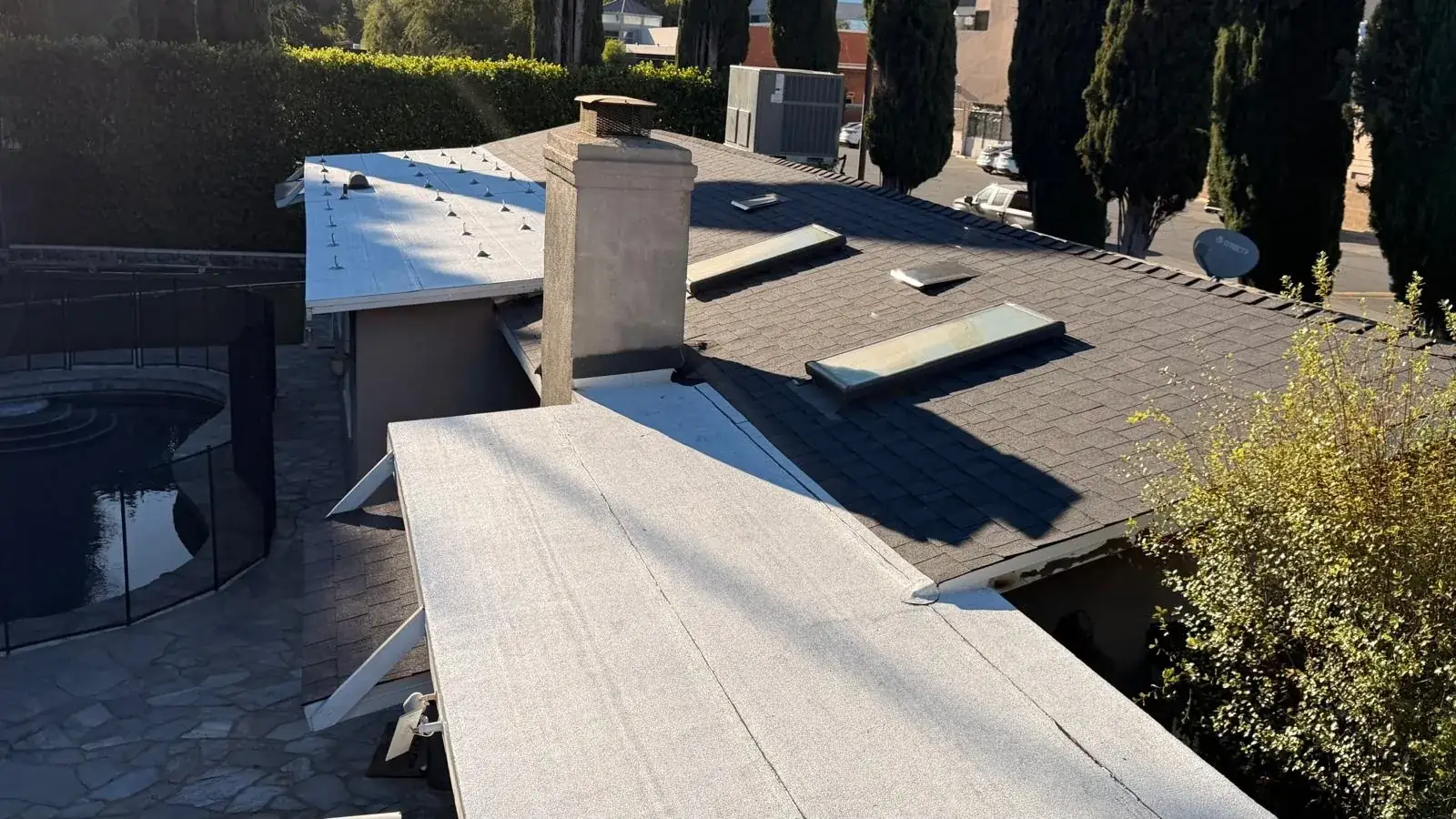
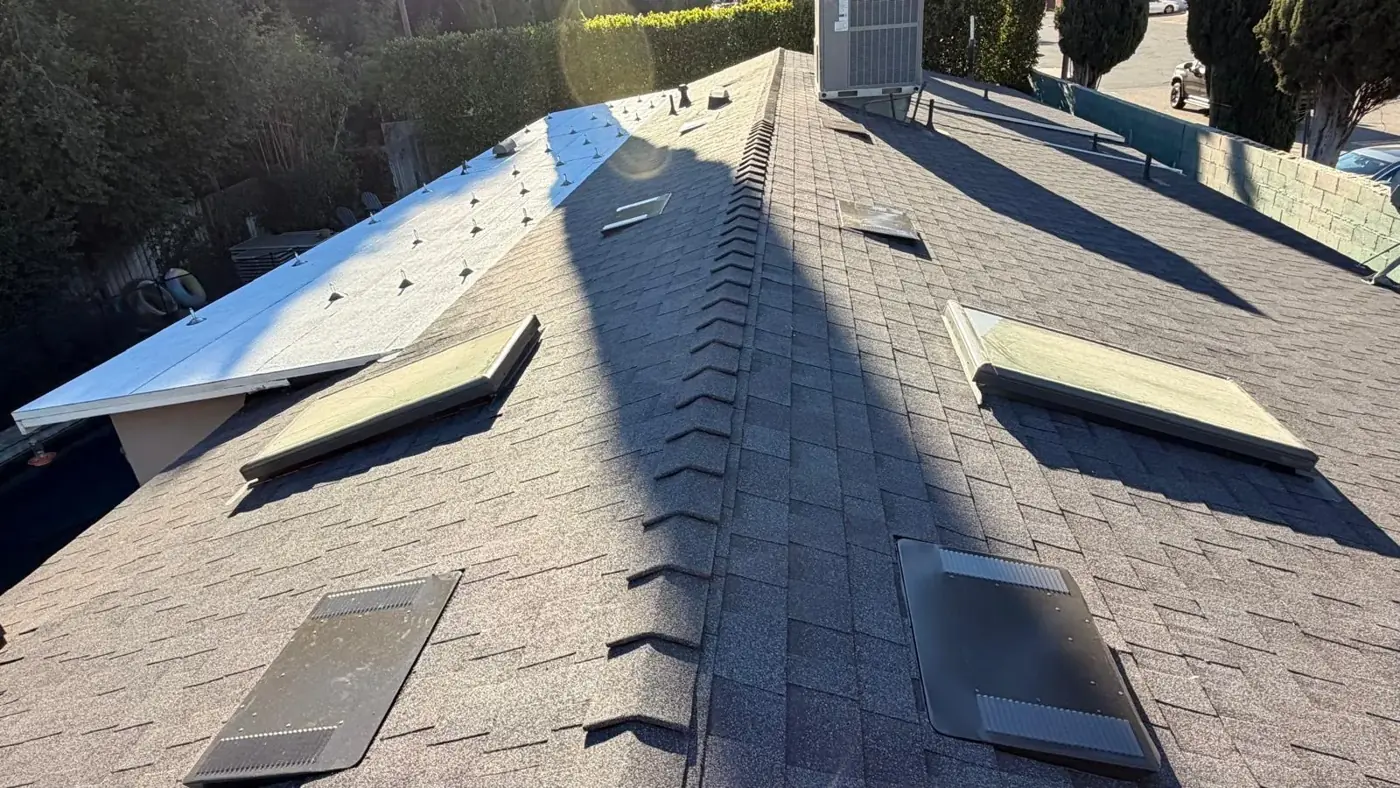
Real example: on an Encino home, we put on a whole new roof before the solar install. The sloped part got about 2,800 square feet of dark Owens Corning shingles. The flat part was 1,600 square feet. The flat roof got two heat-sealed layers. The solar company set its brackets on the first layer, and our white top layer went over them. The finished roof has no holes from the solar install.
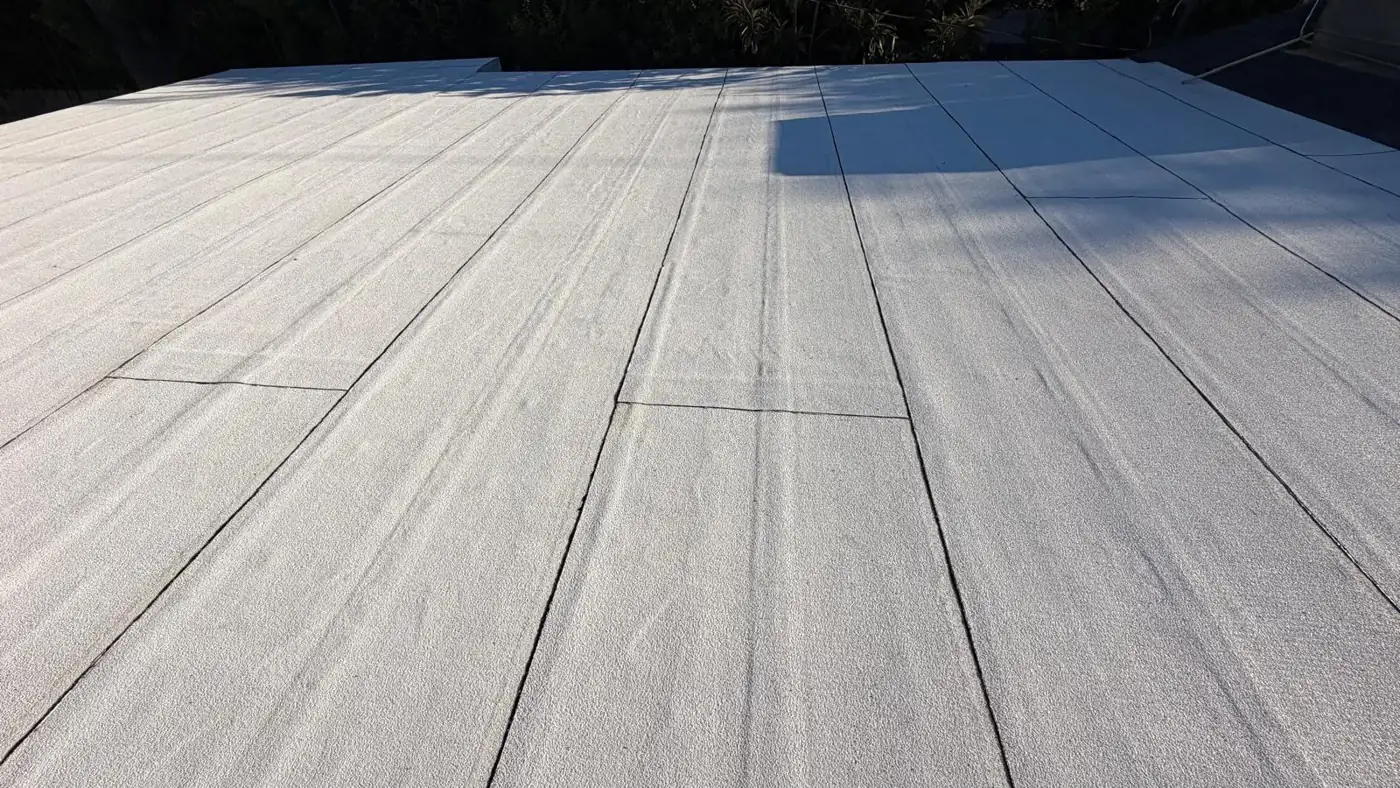
Here's how that flat roof went together:
A solar-ready flat roof, layer by layer
- Base sheet. The first layer is nailed to the wood with wide-cap nails.
- First torch-down layer. A smooth sheet is heated with a torch so it melts onto the base sheet. This is the first waterproof layer.
- Solar brackets. The solar company attaches its brackets on top of that layer.
- White cap sheet. The top layer is torched over everything and sealed around each bracket.
Holes are where flat roofs leak. Building experts give the same advice: plan the solar mounts before the roof is finished, so the roofer can seal them. That only works if your roofer and your solar company are talking before the job starts. We'll do that with yours.
Does A New Roof In Los Angeles Have To Be A Cool Roof?
On most homes, yes. The City of Los Angeles requires a cool roof, one that reflects more sunlight, when more than half of the roof is replaced (LA green building code summary). A full re-roof always crosses that line. Nearby cities like Burbank and Glendale follow California's Title 24 energy code, which has its own cool roof rules.
That doesn't mean a white roof. Dark can pass too. Owens Corning makes cool shingles in dark colors, rated by the Cool Roof Rating Council, the group that tests cool roofing. The Encino home used a color called Midnight, and it passed. Flat roofs have a higher bar, which is why they're almost always white. Our cool roof page covers the options.
A cool roof also helps the panels a little. Panels lose some output as they heat up, and a roof that reflects heat runs cooler underneath them. The bigger win is the cooler attic.
When You Don't Need A New Roof Before Solar
If your roof is under about 10 years old, has never leaked, and passes an inspection, go ahead with solar. Skip us. A new roof you don't need is money you could put toward the panels. We'll tell you that during the estimate if it's true for your home.
Three things still matter on a newer roof:
- Get the inspection anyway. It's the only way to know the roof's condition, and it gives you a record of the roof before the panels go on.
- Ask who fixes a leak at a mount. Get it in writing from the solar company. Their mounts are the new holes in your roof.
- Keep your roof warranty paperwork. Shingle systems usually come with a manufacturer warranty, and ours add a 10-year workmanship warranty. Exact terms depend on the product and are in your estimate. Know what each one covers before another company drills into the roof.
Checklist Before You Sign A Solar Contract
- Have the roof inspected by a licensed roofer, not only the solar company's salesperson.
- Ask for the roof's remaining life in years, in writing.
- If it's 10 years old or more, get a re-roof quote and compare it with the cost of moving the panels later.
- Check every license on the state license board's site: C-39 or B for the roof, C-46 or C-10 for the panels.
- Get the two companies talking about dates and, on a flat roof, about the mounts.
- Pick a roof color that passes your city's cool roof rule.
- Confirm who pulls each permit. Two jobs, two permits.
- Don't count on a tax credit for the roof. The IRS says traditional shingles and framing under solar panels don't qualify, and the federal residential credit ended for systems placed in service after December 31, 2025.
Planning A New Roof Before Solar In The San Fernando Valley?
We replace roofs across the San Fernando Valley, including Encino, Sherman Oaks, Northridge and nearby cities like Burbank and Glendale. Our own crews build shingle, tile, flat and cool roof systems, and the permit gets pulled on every re-roof. Book a free estimate. We'll tell you whether your roof should come first, and if it should, we'll plan the dates with your solar company.
Roofing Terms On This Page
Plain-English meanings of the trade terms used above.
- Re-roof
- Tearing off the old roof and putting on a brand-new one.
- Underlayment
- The waterproof sheet under the shingles or tiles. If water gets past the top layer, this layer stops it.
- Solar mount
- The metal bracket that holds a solar panel's frame to the roof. Each one is a hole in the roof that has to be sealed.
- Torch-down roofing
- Flat-roof sheets that get heated with a torch so they melt together and seal every seam.
- Cap sheet
- The top layer of a flat roof. A white one keeps the roof cooler.
- Cool roof
- A roof that reflects more sunlight than a normal roof, so it stays cooler. Los Angeles requires one on most re-roofs.
- C-39 license
- The California contractor license for roofing. A solar company usually holds a different license (C-46) and can't re-roof.
Frequently Asked Questions
Yes. The panels and their mounts come off so the old roof can be torn off and the new one installed. A solar or electrical contractor removes and reinstalls them, and the roofer does the roof. Plan on a separate permit for each job.
Usually not. In California, a re-roof permit goes to a licensed roofing contractor (C-39) or a general building contractor (B). A solar contractor's C-46 license doesn't cover roofing. Some solar companies partner with a roofer, so ask who actually does the roof and check that license.
On most homes, yes. The City of Los Angeles requires a cool roof when more than half of the roof is replaced, which is any full re-roof. Dark shingles can still pass, as the Encino home below shows. We confirm the rule for your city during the estimate.
You can, but it's a gamble. Most shingle roofs in the Valley last 20 to 30 years, so a 15-year-old roof may need replacing while the panels are still working. Get the roof inspected first. If it has fewer than 10 years left, replace it before the panels go on.
No. The IRS says traditional shingles and roof framing that support solar panels don't qualify, even when the roof is replaced for the install. The federal residential credit also ended for systems placed in service after December 31, 2025. Ask your tax preparer what applies to you.
Most of our re-roofs take 4 to 10 days, depending on the size of the roof and the material. Tell your solar company the finish date so their install lands after our final inspection. On a flat roof, the solar crew may need to come in between our layers, so we plan the dates together.